
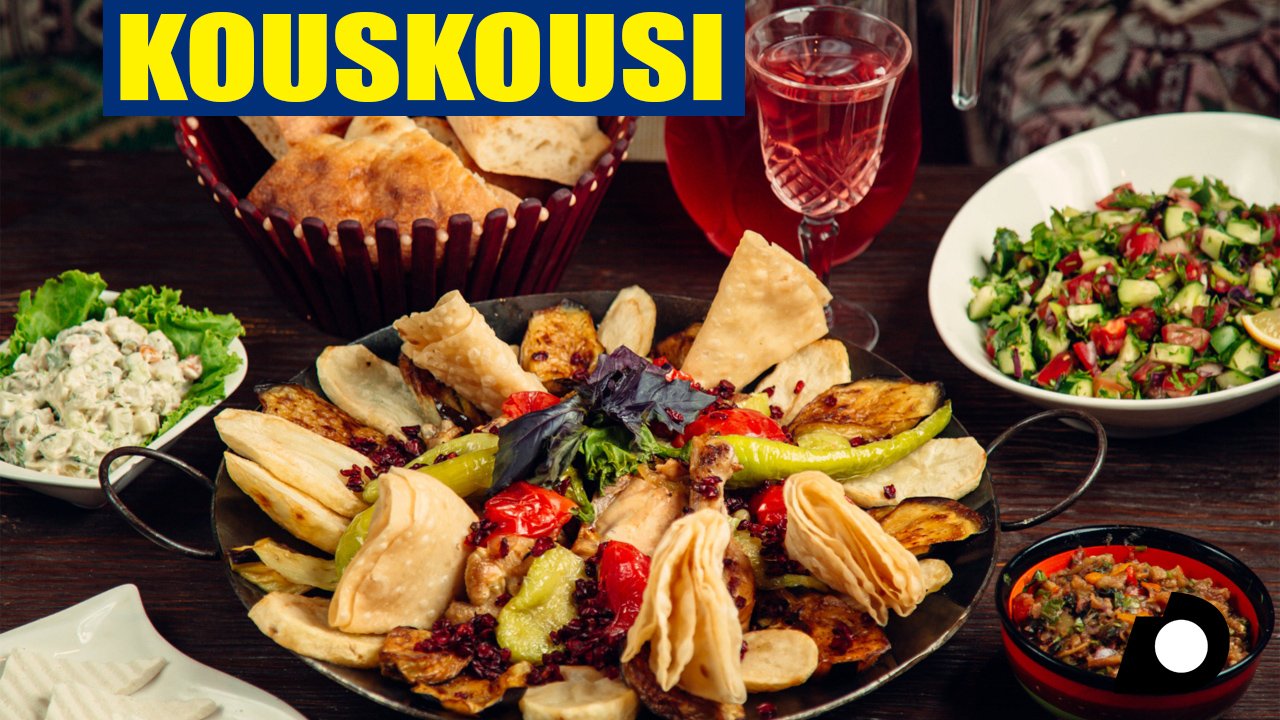
Kouskousi is the name many people in North Africa use for the dish the rest of the world knows as couscous. It is made from tiny steamed semolina grains and it sits at the center of daily meals and big family gatherings across Tunisia, Algeria, Morocco, Libya, and Mauritania. If you have seen the word “Kouskousi” online and wondered whether it is a new food trend or simply another name for couscous, you are in the right place. This guide walks through where the word comes from, how the dish is made, why it carries so much cultural weight, and how you can prepare it in your own kitchen.
What Is Kouskousi, Exactly?
Kouskousi refers to small, round pellets of semolina (a coarse flour made from durum wheat) that are steamed until light and fluffy. The word is simply a regional spelling of couscous, and it shows up often in Tunisian Arabic, where the dish is written as كسكسي and pronounced roughly as “kosksi” or “kouskousi.” So when someone asks what Kouskousi is, the short answer is that it is couscous by another name, tied closely to Tunisian and broader Maghrebi cuisine.
The grains themselves are not a separate grain crop. They start as durum wheat semolina that is moistened, rolled by hand, and coated with dry flour so the pellets stay separate instead of clumping together. Once steamed, they puff up slightly and take on a texture somewhere between rice and a very fine pasta.
People sometimes assume Kouskousi is a distinct grain, a new ingredient, or even a trendy dish invented for social media. It is none of these things. It is a centuries old staple with a long documented history, and understanding its background helps explain why it holds such an important place at North African tables.
Where Does the Word Kouskousi Come From?
According to the Online Etymology Dictionary, the English word “couscous” entered the language around 1600 through French, and the French word traces back to the Arabic term kuskus. That Arabic word is connected to the verb kaskasa, which means “to pound.” This lines up with how the dish is traditionally made, since the semolina grains are worked and rolled by hand before steaming.
Most food historians also point to Berber roots for the dish and its name, since couscous was eaten by Berber communities in North Africa long before Arabic became the region’s dominant language. Some linguists connect it to an old Berber root meaning “well formed” or “rounded,” which fits the shape of the finished grains perfectly.
The spelling “Kouskousi” specifically reflects the Tunisian Arabic pronunciation and transliteration of the word. Language resources that document Tunisian Arabic vocabulary list “couscousi” (کسکسي) as the standard term locals use for the dish, which is why you will see it written as Kouskousi, Couscousi, or Kosksi depending on the source.
A Brief History of Kouskousi
The history of Kouskousi stretches back many centuries. Archaeologists have found cooking vessels in Algeria that resemble the two part steamer still used to make couscous today, with some pieces dating as far back as the third century BCE in the ancient Numidian kingdom. Written recipes appear later, including one found in the thirteenth century Arabic cookbook Kitab al Wusla ila al Habib, which shows that couscous was already a well established dish by the medieval period.
Over time, the dish spread beyond North Africa. Trade and migration carried it to Sicily and Sardinia, and French colonial contact with the Maghreb in the nineteenth and twentieth centuries introduced it widely to Europe. Today it is eaten across the Mediterranean and well beyond, but its roots remain firmly planted in Berber and North African tradition.
In December 2020, UNESCO placed couscous on its Representative List of the Intangible Cultural Heritage of Humanity. The listing was a joint submission from Algeria, Morocco, Tunisia, and Mauritania, and it recognized the full range of knowledge tied to the dish: growing the wheat, grinding it into semolina, rolling it by hand, steaming it, and serving it as part of family and community life. UNESCO specifically highlighted that couscous functions as a “great unifier” in a region that does not always agree on much else.
How Kouskousi Is Traditionally Made
Making authentic Kouskousi is a slow, hands on process, even though most home cooks today rely on quicker, pre steamed versions sold in stores. Here is how the traditional method works.
- Durum wheat is ground into semolina, then sprinkled with water and rolled by hand into small, even pellets.
- The pellets are coated lightly with dry semolina or flour so they do not stick together.
- The grains are sieved to sort them by size, which keeps the texture consistent.
- They are steamed, often several times, inside a couscoussier, a tall pot with a perforated top section that sits over a simmering stew.
- As the grains steam, they absorb the aroma and flavor of the broth bubbling beneath them, which is part of what gives traditional Kouskousi its deep, savory taste.
In many households, especially in rural areas, groups of women once gathered to roll large batches of semolina by hand and dry it in the sun for weeks at a time, storing it for later use. That communal preparation is part of why UNESCO recognized the dish as cultural heritage rather than just a recipe.
Regional Variations of Kouskousi
Kouskousi looks and tastes different depending on where it is served. A few well known regional styles include:
- Tunisia. Tunisian Kouskousi tends to be spicier than its neighbors, often built around harissa, a fiery chili paste. Fish couscous is a Tunisian specialty along the coast, while a sweeter version called mesfouf, made with raisins, dates, or pomegranate seeds, is served for breakfast or dessert.
- Morocco. Moroccan couscous is traditionally served on Fridays after midday prayers. A classic version includes seven vegetables steamed over lamb or chicken, and a sweeter variation called couscous with tfaya adds caramelized onions, raisins, and toasted almonds.
- Algeria. Algerian couscous is a true everyday staple, with countless regional takes that vary by city and even by family, often featuring lamb, chicken, or vegetables in a rich broth.
- Libya. Libyan couscous often appears with lamb or camel meat, and it pairs with desserts like maghrood, a date filled pastry.
- Mauritania. Mauritanian couscous traditions were part of the 2020 UNESCO recognition alongside Algeria, Morocco, and Tunisia, reflecting the dish’s importance across the wider Maghreb.
It is worth noting that Kouskousi differs from similar looking dishes in the eastern Mediterranean. Lebanese moghrabieh uses much larger pearls, and Palestinian maftoul is hand rolled from bulgur wheat rather than semolina. Both are related in spirit but are not the same dish as Kouskousi.
Why Kouskousi Matters Culturally
Kouskousi is far more than a side dish. Across the Maghreb, it appears at weddings, religious holidays, family reunions, and Friday lunches, and it is often served from one large communal platter that everyone eats from together. UNESCO’s heritage listing specifically called out the social rituals tied to the dish, including how knowledge of making it passes from one generation to the next through observation and practice rather than written recipes.
This communal aspect explains why the dish carries such emotional weight for people from the region. Sharing Kouskousi is a way of expressing hospitality, marking a special occasion, or simply bringing a family together at the end of a long week.
Nutrition and Health Benefits of Kouskousi
Kouskousi is a carbohydrate rich food made from durum wheat, so it provides a steady source of energy. A typical quarter cup serving of dry couscous (about 60 milliliters) contains roughly 150 calories, 5 grams of protein, close to no fat, and around 30 grams of carbohydrates, according to standard nutrition data for the grain.
Because it is a wheat product, Kouskousi is not suitable for people with celiac disease or gluten sensitivity. On the other hand, it is naturally low in fat, contains a modest amount of plant based protein, and pairs well with vegetables, lean proteins, and healthy fats like olive oil, which can round out a meal nutritionally. Whole wheat versions of couscous also offer more fiber than the refined white variety, so choosing that option can make the dish a bit more filling and better for digestion.
As with most grain based dishes, portion size and toppings matter more than the grain itself. A vegetable heavy, broth based Kouskousi with lean protein is a balanced meal, while a version loaded with butter, sugar, or fatty meats will naturally be higher in calories. Choosing whole wheat couscous, adding a variety of vegetables, and going easy on added fats are simple ways to keep a bowl of Kouskousi both satisfying and nutritious.
How to Cook Kouskousi at Home
You do not need a couscoussier or hours of free time to enjoy Kouskousi at home. Most grocery stores sell pre steamed, quick cooking couscous that is ready in minutes. Here is a simple method:
- Bring an equal or slightly larger amount of water or broth to a boil (for example, one and a quarter cups of liquid for one cup of couscous).
- Stir in the dry couscous, a pinch of salt, and a small amount of olive oil or butter.
- Remove the pot from the heat, cover it, and let it sit for about five minutes.
- Fluff the grains gently with a fork to separate them before serving.
From there, you can dress up your Kouskousi however you like. Toss it with roasted vegetables and chickpeas for a simple vegetarian meal, stir in dried fruit and cinnamon for a Moroccan inspired side, or top it with a spiced tomato and harissa sauce for a Tunisian style dish. It also works well cold, tossed with lemon juice, herbs, and diced vegetables for a quick salad.
Kouskousi Versus Couscous: Is There a Difference?
In practical terms, there is no real difference between Kouskousi and couscous. Kouskousi is simply the way the dish’s name is transliterated from Tunisian Arabic into English, while “couscous” is the more common spelling used internationally after passing through French. Both words describe the same steamed semolina dish with roots in Berber and North African cooking. If you see a recipe or article using either spelling, you can expect it to be talking about the same food.
Conclusion
Kouskousi is the North African name for one of the most culturally significant dishes in the Mediterranean world. Its story stretches from ancient Berber communities through medieval Arabic cookbooks to a 2020 UNESCO heritage listing shared by Algeria, Morocco, Tunisia, and Mauritania. Whether you encounter it as a spicy Tunisian fish couscous, a sweet Moroccan version with raisins and almonds, or a simple weeknight side dish made in minutes, Kouskousi represents centuries of tradition, skill, and shared meals. Learning its history makes the dish taste even better the next time it lands on your table.
Frequently Asked Questions
What is Kouskousi?
Kouskousi is another name for couscous, a dish made from small steamed pellets of durum wheat semolina. The spelling comes from Tunisian Arabic and is common in North African cuisine.
Is Kouskousi the same as couscous?
Yes. Kouskousi and couscous refer to the same dish. The difference is only in spelling and regional pronunciation, not in the food itself.
Is Kouskousi healthy?
Kouskousi can fit into a balanced diet. It is low in fat and provides plant based protein and carbohydrates, though it does contain gluten and is higher in calories when paired with rich sauces or meats.
How do you cook Kouskousi at home?
Most store bought couscous only needs boiling water or broth poured over it, followed by a five minute rest covered with a lid. Fluff it with a fork before serving.
Where does Kouskousi come from?
Kouskousi comes from North Africa, with roots in Berber communities in what is now Algeria and Morocco. It later spread across Tunisia, Libya, Mauritania, and eventually the wider Mediterranean region.