Data has become part of everyday decision-making across industries. Retail businesses study customer behaviour, banks analyse financial patterns, healthcare organisations work with patient data, and logistics companies use information to improve routes and delivery times. Behind many of these activities are professionals who can collect, organise, analyse, and interpret large amounts of information.
This growing reliance on data has made applied data science an important field for graduates and professionals interested in technology, analytics, and problem-solving. Unlike learning that focuses mainly on concepts, applied data science places considerable attention on using analytical methods to address practical problems.
For people who want to develop advanced knowledge in this area, postgraduate study can provide a structured route into subjects such as statistics, programming, machine learning, data visualisation, and analytical decision-making.
What Is Applied Data Science?
Applied data science is the practical use of data science methods to solve problems and answer questions. It combines several disciplines, including mathematics, statistics, computing, and business analysis.
A data professional may receive thousands or even millions of individual data points. The challenge is not simply having access to this information. The real task is determining which information matters, preparing it correctly, finding meaningful patterns, and presenting the findings in a form that people can understand.
For example, a retailer may want to know why customers stop purchasing certain products. A financial organisation may need to identify unusual transaction patterns. A transport company may want to predict periods of high demand.
Each situation involves a different problem, but data can contribute to the answer.
This is why postgraduate programmes in applied data science commonly combine technical knowledge with practical exercises, projects, and case-based learning.
Building Skills Beyond Basic Data Analysis
Basic data analysis can involve spreadsheets, charts, averages, and simple comparisons. Advanced data science goes considerably further.
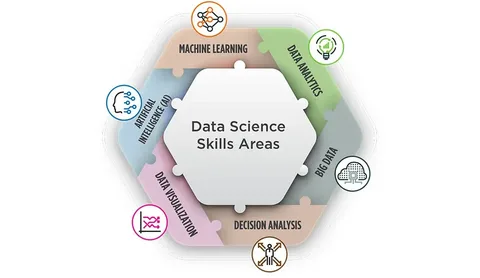
Students exploring an MSc Applied Data Science pathway may encounter areas connected with programming, statistical analysis, data management, machine learning, artificial intelligence, and the interpretation of complex datasets.
The objective is not simply to learn individual tools. Technologies change regularly, so students also need to understand the principles behind analytical techniques.
For instance, learning how a machine learning model works can be more valuable over the long term than memorising the steps required to operate one particular software package.
This foundation can help graduates adapt as new tools, platforms, and analytical methods emerge.
Why Practical Learning Matters
Data science is difficult to master through theory alone.
A student might understand the definition of regression, classification, or clustering but still struggle when presented with an imperfect real-world dataset. Actual datasets may contain missing values, duplicated information, incorrect entries, inconsistent formatting, or irrelevant variables.
Practical assignments help students experience these challenges.
A typical project might require students to identify a problem, obtain or examine relevant data, clean the dataset, choose suitable analytical techniques, evaluate the results, and communicate their findings.
Project-based learning can also develop an important professional habit: asking the right question before choosing the technology.
Not every business problem requires an advanced artificial intelligence model. Sometimes a straightforward statistical analysis can produce a clearer and more useful answer.
Key Skills Developed Through Advanced Data Science Study
Postgraduate data science education can help learners strengthen several connected abilities.
Programming skills can help students manipulate data, automate analytical tasks, and build repeatable workflows.
Statistical thinking helps learners understand relationships, uncertainty, probability, and the limitations of analytical conclusions.
Data visualisation focuses on presenting complicated findings through understandable charts, dashboards, and other visual formats.
Machine learning knowledge can help students explore systems capable of identifying patterns and making predictions based on historical information.
Data management skills are valuable because analysis depends heavily on the quality, structure, and accessibility of the underlying information.
Alongside these technical abilities, communication remains essential. A technically accurate analysis has limited value if its findings cannot be explained clearly to colleagues, managers, clients, or other stakeholders.
The Growing Connection Between Data Science and AI
Artificial intelligence and data science are closely connected, although they are not identical.
Data science focuses broadly on extracting useful knowledge from data. AI covers systems designed to perform tasks that can involve prediction, recognition, generation, reasoning, or automated decision support.
Machine learning sits at an important intersection between the two fields.
As organisations adopt AI-based technologies, professionals also need to think about the quality of the data used to develop and evaluate these systems. Poor-quality or unrepresentative information can affect the reliability of analytical models.
This makes subjects such as data preparation, model evaluation, governance, privacy, and responsible data use increasingly relevant.
Data Science Across Different Industries
One attractive feature of data science is that its applications are not restricted to technology companies.
In financial services, analytical techniques can support risk assessment, customer analysis, forecasting, and fraud detection.
Retail organisations can examine purchasing behaviour, inventory patterns, and customer preferences.
Healthcare organisations may use data to study operational performance, resource requirements, and patient-related trends.
Manufacturing businesses can analyse production information to identify inefficiencies or predict equipment maintenance requirements.
Marketing teams can study campaign performance and audience behaviour, while logistics companies can use historical information to improve planning.
Because the underlying analytical principles can transfer between industries, data science knowledge may support several different career directions.
Choosing a Postgraduate Data Science Programme
Selecting a master’s programme should involve more than looking at the degree title.
Prospective students should examine the curriculum carefully and determine whether it provides an appropriate balance between theoretical foundations and practical application. It is also worth considering assessment methods, project opportunities, learning format, entry requirements, and how the curriculum relates to individual career plans.
A programme offered through a school such as Amity Singapore may be considered alongside other postgraduate options available to students interested in building advanced data capabilities.
Before applying, students should review the latest official course information rather than assuming that every applied data science programme covers identical subjects.
Who May Benefit From Studying Applied Data Science?
The field can appeal to people from several educational and professional backgrounds.
Computing graduates may want to move towards analytics or machine learning. Engineering graduates may wish to apply quantitative abilities to larger datasets. Business professionals may want deeper analytical knowledge to support evidence-based decisions.
Professionals already working with reports, databases, operations, finance, or digital systems may also consider postgraduate study as a way to formalise and extend their existing skills.
However, prospective students should consider their comfort with quantitative subjects. Data science commonly involves mathematics, statistics, logical reasoning, and programming. A willingness to practise technical skills is therefore valuable.
Turning Academic Knowledge Into Professional Ability
Completing a degree is only one part of developing as a data professional.
Students can strengthen their abilities by creating projects that demonstrate the complete analytical process. Rather than presenting only a final chart or model, a strong project can explain the original problem, data preparation process, analytical choices, results, limitations, and possible recommendations.
This type of work demonstrates problem-solving ability rather than familiarity with isolated tools.
Students researching an MSc Applied Data Science programme should therefore consider how the course helps them connect academic concepts with practical analytical work.
The ability to translate data into useful information is becoming relevant across many professions. Developing strong foundations in programming, statistics, machine learning, data management, and communication can prepare learners to work with increasingly complex information and approach business and organisational problems from a more analytical perspective.