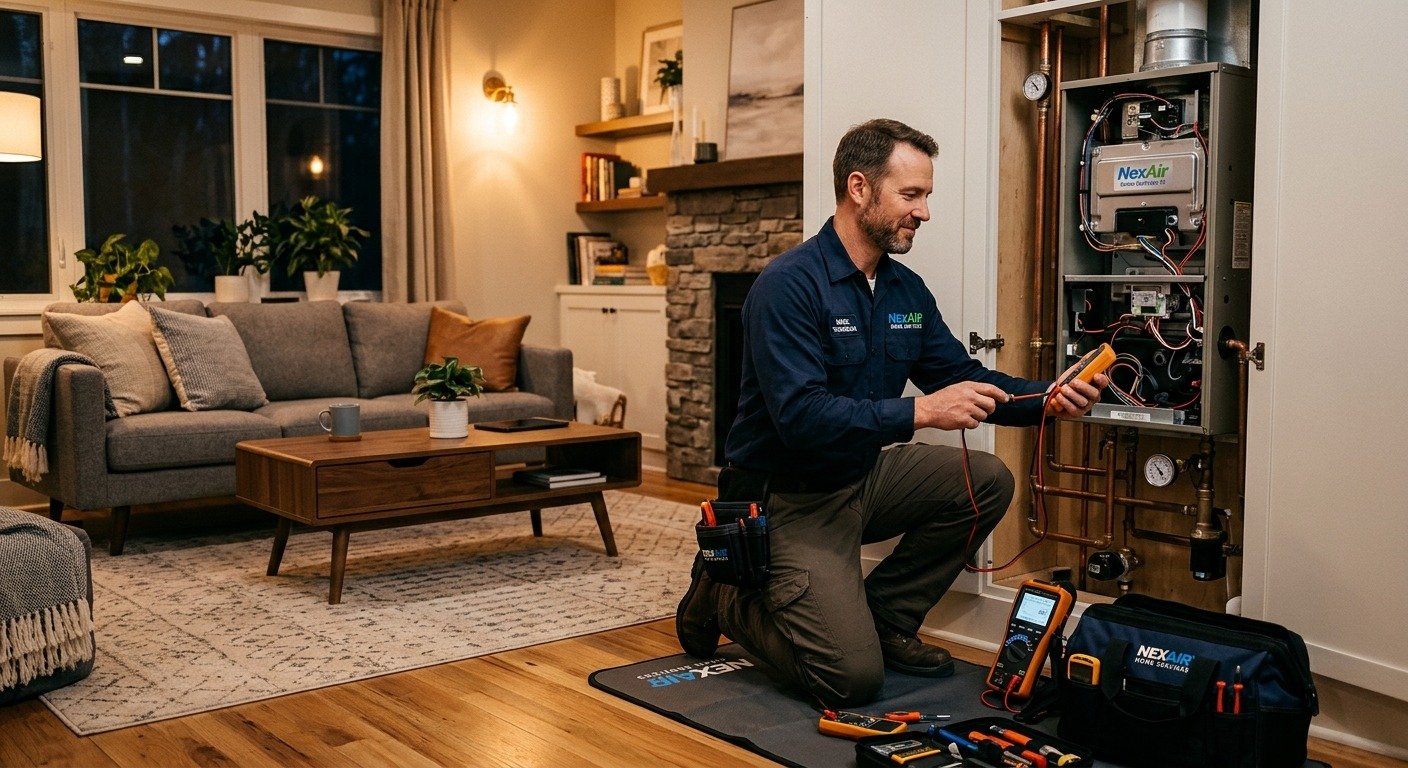
Winter doesn’t wait for a convenient time to test your heating system. One moment you’re cozy on the couch, and the next you’re bundled in blankets wondering why the thermostat reading doesn’t match how cold your living room feels. A heating system in distress rarely gives much warning before it quits altogether, which is exactly why knowing the warning signs matters so much.
At NexAir Home Services, we’ve walked into countless homes where a small, ignorable issue turned into a full system breakdown simply because nobody caught it in time. The good news? Most heating problems show clear symptoms well before they become emergencies. Learning to spot them can save you money, discomfort, and the stress of a freezing house in the middle of January.
This guide walks through the most common red flags your furnace or heat pump might throw at you, what they typically mean, and when it’s time to pick up the phone and call in a professional.
Strange Noises Coming From Your Furnace
Furnaces aren’t silent machines, but they shouldn’t sound like a construction site either. A gentle hum or the soft whoosh of air kicking on is normal. Banging, rattling, screeching, or popping noises are not.
- Banging or booming: Often points to a delayed ignition, where gas builds up before igniting all at once.
- Screeching or squealing: Usually signals a worn-out belt or motor bearing that needs lubrication or replacement.
- Rattling: Could mean loose panels, ductwork, or even a failing blower wheel.
Ignoring these sounds rarely makes them go away. More often, the underlying issue worsens and turns a simple fix into a costly repair.
Uneven Heating Throughout Your Home
Does one room feel like a sauna while another feels like a walk-in freezer? Uneven heating is one of the most common complaints homeowners bring to us, and it can stem from several sources: blocked vents, failing ductwork, a struggling blower motor, or a thermostat that’s simply in the wrong location.
Sometimes the fix is as simple as clearing furniture away from vents. Other times, it points to a deeper mechanical issue that only a trained technician can diagnose accurately. Trying to chase down the cause yourself can lead to hours of frustration and guesswork, especially when the real culprit is hidden inside your ductwork or furnace components.
Rising Energy Bills Without a Clear Reason
Your heating system naturally works harder during the coldest months, so some fluctuation in your energy bill is expected. But if your bill climbs dramatically without a matching jump in usage or outdoor temperature, your system is likely losing efficiency.
A furnace working overtime to produce the same amount of heat is a sign that something, whether it’s a dirty filter, a failing component, or an aging unit nearing the end of its lifespan, is forcing it to consume more energy than it should. Left unaddressed, this inefficiency compounds over time, costing you more with every passing month.
Your System Won’t Stop Running (Or Won’t Start At All)
A heating system that runs constantly without ever reaching the set temperature is straining itself unnecessarily. On the flip side, a system that won’t turn on at all, or shuts off almost immediately after starting, points to an electrical or ignition problem.
Both scenarios share a common thread: something in the system isn’t functioning the way it should. Continuing to use a system in either of these states can shorten its overall lifespan and increase the risk of a complete breakdown at the worst possible time.
A Noticeable Increase in Dust or Poor Air Quality
Your heating system does more than warm your home. It circulates the air you breathe every day. When filters clog, ducts accumulate debris, or components wear down, you might notice more dust settling on furniture, a musty smell when the heat kicks on, or family members experiencing more allergy symptoms indoors.
This is often an overlooked warning sign, but it’s an important one. Poor air quality doesn’t just mean a dirtier home. It can directly affect your comfort and health throughout the colder months.
Your Furnace Is Showing Its Age
Most furnaces are built to last between 15 and 20 years with proper maintenance. As a system approaches or passes that range, breakdowns become more frequent, parts become harder to source, and the overall efficiency drops significantly compared to newer models.
If your system falls into this category and you’re noticing any of the warning signs above, it may be facing more than a one-time glitch. Fast, reliable solutions to keep your home warm when it matters most come from scheduling heating repair with technicians who understand exactly what an aging system needs to perform safely and efficiently. Rather than guessing whether a repair or replacement makes more sense, a trained eye can walk you through your options honestly, based on the actual condition of your unit.
Why Catching Problems Early Makes All the Difference
Every one of the warning signs above shares a common theme: small issues left unaddressed tend to grow into bigger, more expensive ones. A squealing belt today can mean a seized motor next month. A minor efficiency drop this winter can mean a full system replacement sooner than expected.
The team at NexAir Home Services has spent years helping homeowners avoid exactly that outcome. Our technicians are trained to diagnose issues quickly, explain what’s happening in plain language, and recommend solutions that fit both your home and your budget. We believe comfort shouldn’t come with guesswork, and that a well-maintained heating system is one of the best investments you can make in your home’s long-term reliability.
If any of the signs above sound familiar, don’t wait for the problem to escalate. A quick inspection today could be the difference between a simple fix and an emergency repair during the coldest night of the year.
Frequently Asked Questions
How much does a typical heating repair cost?
Costs vary widely depending on the issue, your system type, and the extent of the damage. Minor repairs like thermostat replacements tend to be inexpensive, while motor or heat exchanger issues cost more. A technician can provide an accurate estimate after diagnosing the specific problem.
How long does a heating repair usually take?
Many common repairs can be completed in a single visit, often within one to two hours. More complex issues involving specialty parts may take longer if those parts need to be ordered.
Can I keep using my furnace if it’s making strange noises?
It’s not recommended. Unusual noises typically indicate a mechanical issue that will worsen with continued use. Turning off the system and scheduling a professional inspection helps prevent further damage.
Is it better to repair or replace an aging furnace?
This depends on the age of your unit, the cost of the repair, and how frequently breakdowns have occurred. As a general guideline, if your furnace is older than 15 years and repair costs exceed 50% of a replacement, a new system is often the more cost-effective choice long term.