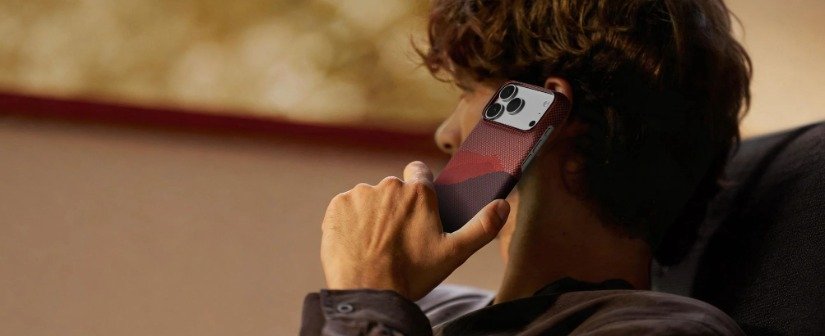
The best material for a lightweight iPhone case depends on what you want the case to feel like. Aramid composite suits a thin woven shell; flexible TPU suits designs with yielding edges; silicone offers a softer surface; polycarbonate suits a rigid shell. The finished construction determines how much material is actually added.
An aramid fiber iphone case is worth considering when a slim outline is the main goal. PITAKA’s aramid fiber iphone 17 pro case collection gives a model-specific reference, making it easier to compare like-for-like fit instead of different phone sizes.
4 material options serve different priorities
- Aramid composite: A good candidate for a close-fitting woven shell. Examine its edge coverage and surface finish alongside the material.
- TPU: A flexible polymer used in many yielding case frames. The amount and shape of material at the corners can change the bulk substantially.
- Silicone: Often chosen for a soft-touch surface. Consider how the finish moves against pocket fabric as well as how it feels in the hand.
- Polycarbonate: A rigid plastic used for shaped shells and clear backs. A thin rear panel and a reinforced multi-part design can feel quite different despite sharing this material.
These are construction choices rather than a universal ranking. A case can also combine materials, such as a rigid back and flexible sides.
Compare complete cases for the same phone
A material name does not give the mass of a finished accessory. Magnets, camera rings, liners, stands and corner structures all contribute. A heavy attachment can outweigh the saving made by a thin shell.
For a fair comparison:
- Select the same phone model for every option.
- Use the manufacturer’s figure for the complete chosen case.
- Check whether a stand, front piece or other component is included.
- Add the accessories that will stay attached during daily carrying.
PITAKA’s Forest Dawn Edge case for iPhone 17 Pro lists a mass of 20.29 ±1 g. That is a reference for one finished configuration, not a weight assigned to aramid cases as a category.
A comfortable surface can matter more than a small weight difference
A phone that is pleasant to hold may be easier to use for a long reading session, even if another case is marginally lighter. Side shape, friction and the lower edge all affect the feel of the setup.
Think about the moment that bothers you most. If it is pulling the phone from a tight pocket, examine the outline and surface. If it is supporting the phone while reading, focus on the bottom edge and grip. If it is carrying a magnetic wallet, assess the complete stack.
Leave room for the protection you need
Reducing weight by removing coverage has consequences. Open sides, shallow edges and minimal corners can make a case less bulky, but they change which surfaces are exposed and how much structure is available during an impact.
Choose the construction that meets the actual requirement first, then compare weight within that group. For some owners, a thin woven shell will be the right answer. For others, the more useful lightweight option will retain a substantial frame and save bulk elsewhere.
Material descriptions are general design characteristics; the quoted mass is PITAKA’s specification for the named iPhone 17 Pro variant, not an independent protection comparison.