I will admit the skepticism up front, because a mask that lights up red and promises to do something to your collagen sounds like exactly the kind of thing worth being skeptical about. I had seen the devices on enough bathroom shelves in enough photos to be curious, and curious eventually turned into ordering one, which is how most of these experiments start.
What follows is not a lab report. It is what actually happened over roughly five weeks of using an at-home red light mask several nights a week, written the way I would tell a friend who asked whether it was worth the counter space, rather than the way a brand would write it.
Why I Tried At-Home Red Light Therapy in the First Place
The appeal was less about a single dramatic promise and more about the math of it. In-clinic LED sessions run anywhere from fifty to over a hundred dollars a visit, and the research behind red and near-infrared light, collagen support, calmer-looking skin, less visible fine lines, keeps showing up in dermatology literature regardless of which device delivers it. A home version that could be run three or four nights a week for the price of a handful of clinic visits seemed worth testing properly rather than dismissing.
Autumn made the timing easier to justify, if I am honest. A fall skincare reset was already underway in my bathroom, heavier moisturizer, gentler cleanser, less frequent exfoliation, and a light therapy habit slotted into that reset rather than competing with it.
Setting Up and the First Few Sessions
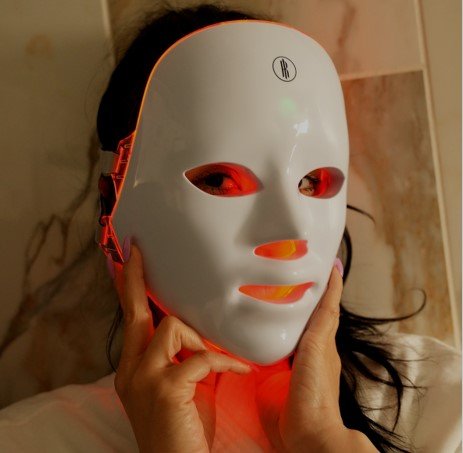
The mask I settled on was the RegenaLight red light therapy device, mainly because it was cordless and charged from a single button rather than needing a controller cable tethered to an outlet, which mattered more to how often I actually used it than I expected going in. Setup was a charge, a quick look at the color settings, and nothing resembling an instruction manual I needed to sit down and read.
The first session felt a little strange and not unpleasant, warm rather than hot, with a faint pink glow visible through the eye holes. Ten minutes went by faster than I assumed it would, mostly because I used it while reading rather than sitting still staring at a wall, which the cordless design made possible.
What Changed After Two Weeks
Honestly, not much that I could point to with confidence. Skin felt slightly calmer by the end of week two, and a couple of small blemishes along my jaw cleared faster than they usually do, but two weeks is short enough that I was genuinely unsure whether that was the light or just a normal week for my skin. I kept a loose log mostly to stop myself from either overselling or dismissing it too early.
Consistency turned out to be the harder part than the sessions themselves. Four nights a week was the plan, and three was closer to the reality most weeks, which research into photobiomodulation suggests matters, since the published studies behind red light’s collagen effects generally run on a cumulative, several-times-a-week schedule rather than occasional use.
What Changed After Five Weeks
This is where it stopped feeling like a maybe. Texture was the most noticeable shift, less roughness under foundation, a smoother feel first thing in the morning that I had stopped expecting from my late twenties skin. Tone evened out somewhat too, less redness around the nose and a bit less contrast between the center of my face and the rest of it.
Fine lines did not disappear, and I want to be clear that nothing here reads as dramatic in a before-and-after sense. What changed was closer to skin looking rested, the kind of difference a good night’s sleep makes rather than the kind a procedure makes, which tracks with what the research actually claims rather than what some marketing around this category implies.
What a Red Light Mask Does Not Do
It is worth being honest about the limits, since the category oversells itself often enough that the realistic version deserves saying plainly. Nothing about five weeks of light sessions touched deeper wrinkles, sagging, or the kind of volume loss that only fillers or more invasive treatments address, and anyone expecting that outcome from a mask will be disappointed regardless of which brand they buy.
It also did nothing for the two stubborn dark spots I have had for years, which is consistent with red and near-infrared light targeting collagen and inflammation rather than pigment. A device built around blue or green wavelengths, or a dedicated pigment treatment, would be the more honest tool for that particular complaint.
Was the Routine Worth Keeping?
Yes, though the honest answer involves a caveat about habit rather than miracle. The sessions became part of winding down for the night, something to do while scrolling or reading rather than a chore competing for attention, which is probably the real reason I kept it up past the first two skeptical weeks. A bedroom that already feels calm makes any wind-down routine easier to stick to, and small changes to how a bedroom feels did more for that than I expected going in.
Price is the other honest factor. At roughly a fifth of what a single in-clinic session costs, the device paid for itself against the clinic comparison within the first month, and whatever it continues to do from here is essentially free.
Is At-Home Red Light Therapy Worth Trying?
For texture and tone, cautiously yes, provided the expectations stay realistic and the sessions actually happen most weeks rather than occasionally. For anything structural, deep lines, sagging, pigment, it is the wrong tool, and no amount of consistency changes that. Five weeks in, I am still using it, which is a better endorsement than anything I could have written after week one.