Two jars can share an amber colour, a wooden lid and a mountain illustration while telling very different stories. One might explain the harvest and the people involved. Another might offer little beyond the word premium. The packaging introduces the product, but it cannot explain the journey on its own.
Understanding honey provenance means looking at where the honey began, who handled it and how that account connects to the jar for sale. It is a way to make sense of specialist foods without confusing an attractive story with evidence. Nepalese mad honey offers a particularly revealing example because its harvesting background is such a visible part of its identity.
Food traditions become more interesting when their makers are part of the explanation. Drop Magazine’s guide to the preparation and heritage behind kouskousi takes that approach to a familiar dish. The same curiosity can make a honey label more informative: look beyond the name to the work it represents.
Honey Provenance Is More Than a Country Name
Geographical origin is the starting point, not the complete account. A country name identifies a place; a floral description identifies the plants associated with the honey. Details about harvesting, processing and packing add further layers. Reading those statements separately makes it easier to understand what a seller is actually claiming.
Terms such as raw, wild and single-origin should prompt different questions. Raw invites a question about processing. Wild invites a question about the source and harvesting method. Single-origin invites a question about the boundary being used, whether that is a country, region or a more specific location. None of those descriptions should be expected to answer every question about a product.
Consider the difference between a harvest location and a dispatch address. Real Mad Honey describes its UK honey as Nepalese, while its product page identifies the Netherlands as the place from which orders are shipped. Those statements describe different stages of the journey and can both be true. A UK-facing shop does not necessarily mean UK-produced honey or UK dispatch.
The People Behind Nepalese Honey Provenance
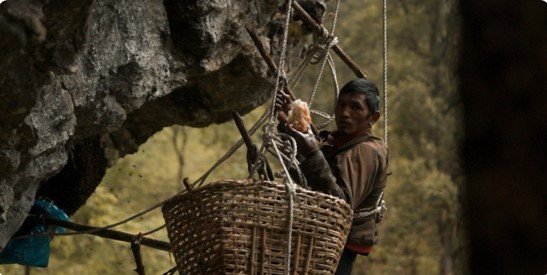
Real Mad Honey describes a supply relationship with two Nepalese brothers who have close connections to Himalayan honey-hunting communities. Its founders visited Nepal, and that journey became the documentary The Journey of the Hive. The account gives readers a way to examine the people and practices behind the brand rather than relying entirely on a product photograph.
For UK readers exploring Nepal-sourced mad honey, the brand’s collection offers a concrete example of origin-led retailing. Its UK mad honey range is Nepal-only. That clarity is useful because the geographical claim can be considered alongside its sourcing material rather than inferred from the look of the packaging.
The company says it works with established local groups, follows seasonal harvest windows and leaves part of the hive behind. These are its stated sourcing practices, not an independent sustainability certification. Their value to a curious buyer is that they are specific enough to investigate. Ask about the practices themselves rather than treating a remote location as automatic proof of responsible production.
What Can Honey Provenance Tell You About Flavour?
Origin becomes easier to appreciate when a producer explains the character of the honey as well as its location. Savannah Bee Company, for example, describes its orange blossom honey through a citrus aroma and gentle floral sweetness, linking those characteristics to the orange blossoms visited by bees. That is a description of botanical origin, not a claim that orange flavouring has been added.
Real Mad Honey describes its Nepalese honey differently, with bitterness and earthy, woody notes. These are the seller’s tasting descriptions, not findings from a tasting conducted for this article. They help explain how the product is positioned, but taste alone cannot verify the country of origin or the contents of a particular batch.
For conventional table honey, thinking about ingredients separately can make flavour easier to understand. Drop Magazine’s guide to choosing tea bases and flavourings offers a useful parallel: the starting ingredient matters before anything else is added. That culinary comparison should not be extended to mad honey as an everyday tea sweetener; its safety considerations are different.
Does Laboratory Testing Prove Honey Provenance?
Documentation is most useful when it answers a defined question. Rather than treating a laboratory badge as a universal endorsement, look at what was measured and how the sample connects to the product being sold.
Sourcing records explain the journey
Supplier details, harvest information and batch references can be considered together. A sourcing film shows a process and its participants; a record connecting a shipment to a batch addresses a different question. The strongest account is one in which those pieces support each other, rather than a striking image being asked to stand in for every stage of the supply chain.
Analytical results have a defined scope
Eurofins describes honey-authenticity analysis as a combination of methods that can investigate added sugars, botanical or geographical origin, and processing irregularities. Different methods answer different questions. A test for one group of compounds should not be presented as though it had also checked every possible contaminant or proved the whole sourcing story.
Real Mad Honey publishes a Nepal laboratory report and provides an order-number search for finding the report associated with a purchase. Its stated policy is to reject batches that fall outside its own thresholds or appear inconsistent. The useful distinction is between access to batch information and a claim of universal safety; these are not the same thing.
Reading Honey Provenance Before a UK Purchase
Practical details bring the story back to the product in front of you. Start with the exact variety and seller, then check whether the information describes the current offering. Prices in pounds make comparison easier for UK shoppers, but the currency does not establish where the honey was harvested or where the parcel starts its journey.
- Look for a named country or region rather than an unexplained mountain image.
- Separate the stated floral source from any added ingredients or flavourings.
- Ask how the batch being sold connects to the available product documentation.
- Check dispatch location, delivery charges and the conditions attached to a refund.
These checks do not require a specialist vocabulary. A clear question about one batch is more useful than a general request for reassurance. Keep the seller’s answer with the order information, particularly when the product is unfamiliar or its sourcing story contributes to the price.
Honey Provenance Does Not Replace Safety Information
Natural origin does not make mad honey risk-free. The Food Standards Agency discusses grayanotoxins in certain rhododendron-derived honeys, and EFSA identifies low blood pressure and a slowed heart rate among the prominent effects of poisoning. A traditional harvesting story cannot remove those risks.
Laboratory testing is not a guarantee that consumption will be safe, and a seller’s serving suggestion is not a universally established safe dose. Mad honey should not be treated as an ordinary sweetener or a treatment for a health condition. Seek urgent medical advice after a suspected poisoning or symptoms following consumption.
A More Informed Relationship With Honey Provenance
Looking closely at a jar does not have to take the pleasure out of discovering unfamiliar foods. It can make the story more meaningful. A named place, a clear explanation of the harvest and documents that match the product offer more to engage with than an unexplained premium label.
Nepalese mad honey illustrates both the appeal and the limits of an origin story. Its sourcing can introduce readers to people and practices they would otherwise never encounter. Understanding the product still means keeping that story alongside its documentation and safety information. The aim is not to find the most dramatic account, but one that remains clear when you ask how each part fits together.