Staff sitting behind clear glass often feel watched all day. Every passer-by can see their screens, paperwork and client meetings, and that constant exposure makes it harder to focus or talk freely. Yet covering the glass completely creates a different problem: rooms turn dim, teams feel cut off, and the office loses the bright, open look that made glass appealing in the first place.
Glass office film solves both issues. The right film blocks views where people need cover and leaves glass clear where light and visibility matter. It goes up in a day, costs far less than new glazing or solid walls, and comes off cleanly when layouts change.
Ways to Balance Privacy and Openness in a Glass Office
Here are five ideas to help you get the balance right:
1. Partial Cover That Keeps the Light Flowing
Full frosting can make a room feel closed off, especially in smaller offices where glass is the main source of daylight. Patterned window film breaks up the view without blocking it completely, so people outside see movement and shapes but not screen content, whiteboards or paperwork.
Geometric grids, dots, honeycomb shapes and fine textures all work well. The denser the design, the more privacy it gives, so a patterned window film can be chosen to suit how each room is used. You get cover where it counts, and the space still feels bright.
2. Horizontal Bands at Eye Level
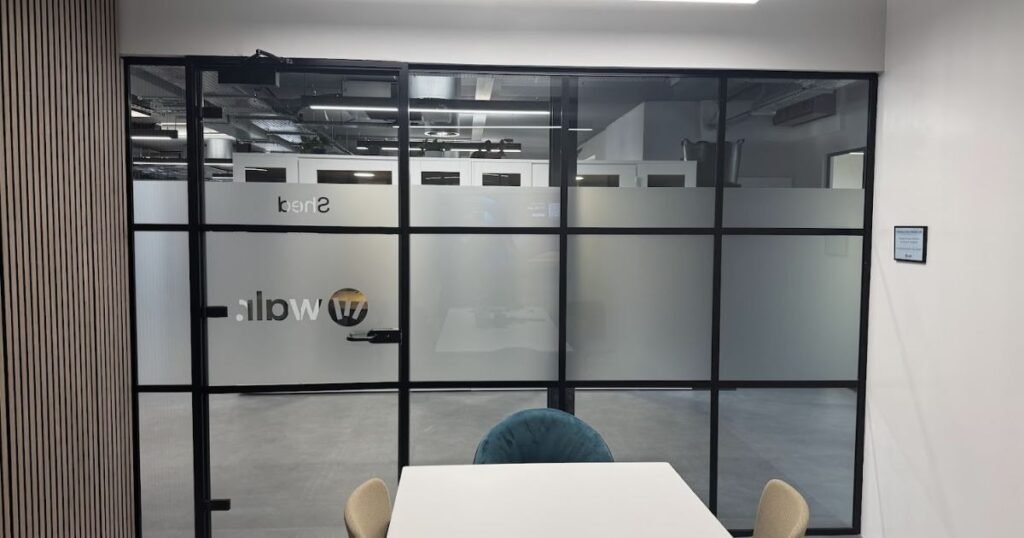
Not every pane needs full coverage. Window film lines running across the glass create a screen at seated and standing eye level, which is where most privacy problems sit. The glass above and below stays clear, so natural light still travels deep into the office and the room keeps its open character.
Changing the width and spacing of the window film lines changes both the look and the level of cover. Thin, evenly spaced stripes feel light and contemporary in shared meeting rooms. Thicker bands give stronger screening for boardrooms and HR offices, where conversations need to stay private.
3. Designs That Reflect the Brand
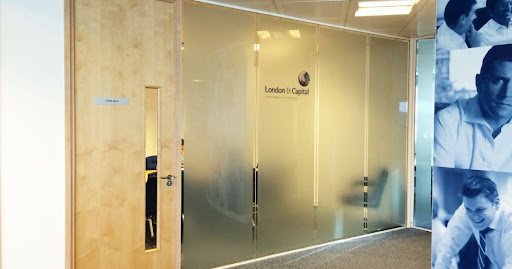
Privacy film can do more than screen a room. A glass film pattern built from a logo icon, brand shape or company colour turns plain partitions into a feature that tells visitors exactly whose office they are in.
This approach works especially well in reception areas and along corridors where clients walk past meeting rooms. A branded glass film pattern gives the people inside enough cover to work comfortably, while the design keeps the space looking deliberate and polished instead of simply blocked off.
4. Gradient Films for a Softer Transition
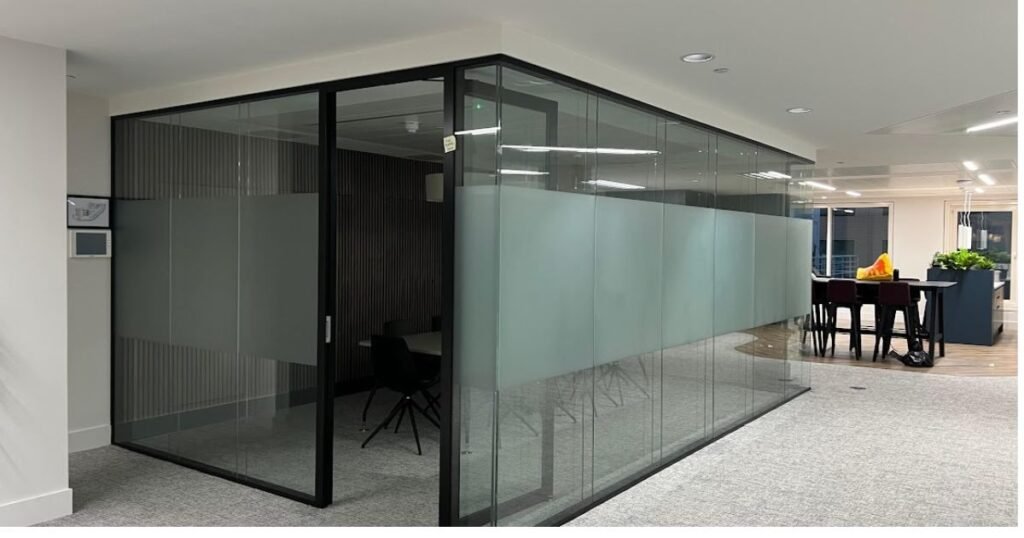
Gradient film fades from frosted to clear, usually with the heaviest cover at the bottom. It screens the area where chairs, desks and laptops sit and opens up towards the ceiling, which makes rooms feel taller and brighter.
This style suits open-plan offices with glass meeting pods, where a solid band could look heavy. It also works on ground-floor windows, giving desks cover from the pavement while keeping the frontage welcoming.
5. Different Levels of Cover for Different Rooms
A single film across the whole building rarely gets the balance right. A director’s office, a quiet focus room and a team breakout space each need different levels of cover, so mixing film types keeps the workplace both practical and open.
Use denser frosting for rooms that handle confidential calls or client files, lighter designs for shared meeting spaces, and clear or near-clear glass in kitchens and collaboration zones. Openness in those areas helps teams connect and keeps the office feeling sociable.
What to Check Before Fitting Glass Office Film
Before ordering any film, check these points:
- Map how each room is used. List which spaces host private meetings, which hold desks near walkways, and which are purely social.
- Check sightlines. Sit at desks and stand in corridors to see what is visible from each angle, including screens and whiteboards.
- Protect daylight. Leave clear glass above and below privacy bands wherever possible so the office doesn’t turn dim.
- Stay on brand. Match colours, fonts and logo versions to your signage and printed materials so the film looks planned.
- Meet safety rules. UK building regulations require visible markings on large areas of glazing, so build manifestation into the design from the start.
Taking time over these checks makes the film work for the people using each space rather than against them. A clear plan avoids costly reprints, keeps the design consistent across every pane, and makes sure staff get privacy where they need it without losing the light and openness that make a glass office worth having.
Finding the Right Mix of Privacy and Light
Glass brings light, space and a modern feel to any office, but leaving it bare can cost staff their comfort and focus. Patterns, bands, gradients and branded designs give you control over exactly how much people can see, without shutting anyone away.
Start by walking through the office and noting where people feel watched and where rooms feel closed in. Then pick films that fix each problem. The result is a workplace that looks professional to visitors and feels comfortable for the people who use it every day.