
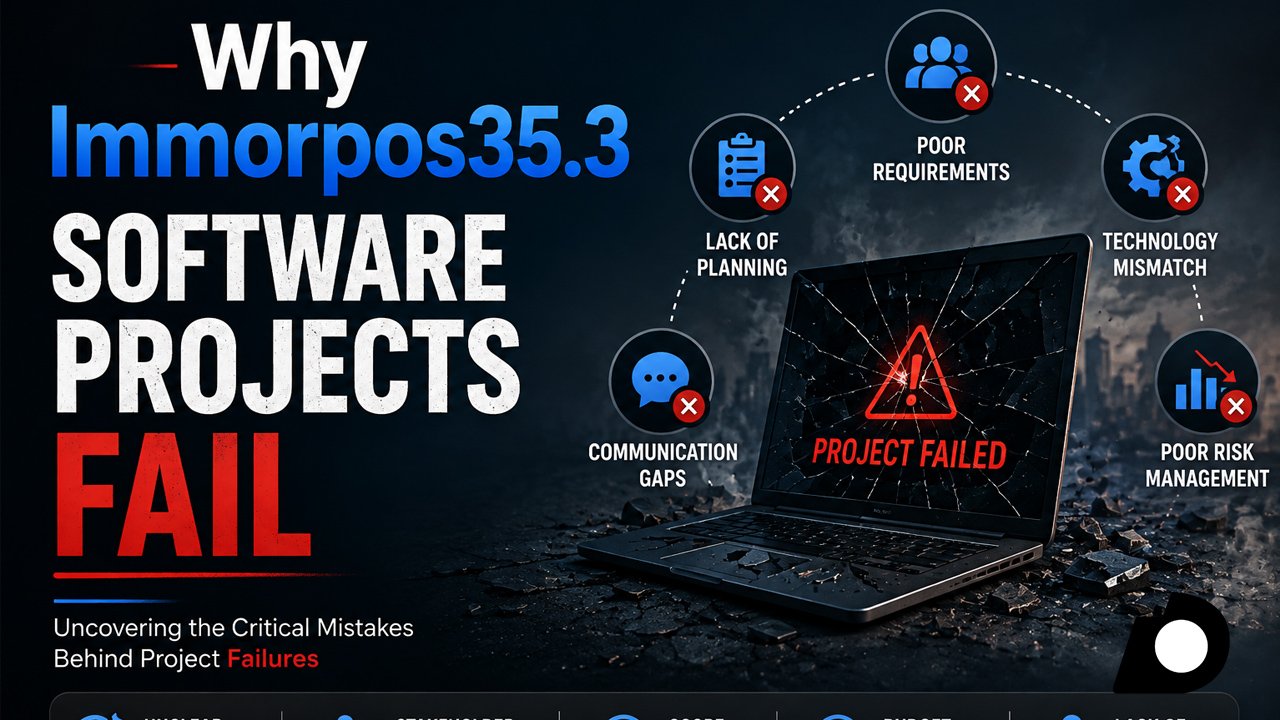
Why Immorpos35.3 software projects fail is a question more teams are asking as they move from spreadsheets and email chains to a single automated system. The tool itself is built to save time, but the rollout often runs into trouble long before anyone sees those benefits. Teams underestimate the planning stage, skip proper training, or try to automate a process that was already broken. The result is a costly project that never delivers what was promised. This article breaks down the most common causes of failure and shows practical ways to avoid them.
Poor Planning Before Implementation
Most failed rollouts trace back to a rushed start. Companies buy the software, set a launch date, and expect the platform to fix problems it was never designed to solve. Without a clear map of current workflows, teams end up automating confusion instead of removing it.
A solid plan starts with writing down exactly how tasks move today, who approves what, and where delays usually happen. Skipping this step means the system gets built around guesses rather than facts, which almost always leads to rework later.
Weak Data Preparation
Immorpos35.3 pulls information from spreadsheets, CRMs, and other business tools, but it can only work with data that is clean and consistent. When customer records, product codes, or task lists are messy going in, the automation simply repeats those mistakes faster.
Before connecting any system, someone on the team needs to check the data for duplicates, missing fields, and outdated entries. This cleanup step is not exciting work, but it prevents small errors from turning into large, expensive problems once automation is live.
Lack of Employee Training
A new platform is only as good as the people using it. Many companies roll out the software and expect staff to figure it out on their own. This leads to workarounds, half-used features, and frustration that spreads across the whole team.
Training should be hands-on and specific to each role, not a single generic session for everyone. Employees who process orders need different guidance than employees who build reports, so the training plan should reflect that difference from day one.
Unclear Ownership and Accountability
When no single person owns the project, small decisions get delayed and nobody notices problems until they grow. Some companies leave implementation to IT alone, while the departments actually using the software are left out of the process entirely.
A named project owner, ideally someone who understands both the business side and the technical side, keeps the rollout moving. This person tracks progress, flags issues early, and makes sure every department has a voice in how the system gets configured.
Ignoring Integration Requirements
Immorpos35.3 is designed to connect with tools like Salesforce, Google Sheets, and Slack, but integrations are not automatic. Each connection needs to be tested carefully, since a mismatch between systems can quietly break workflows that looked fine during setup.
Teams that skip integration testing often discover problems only after the system goes live, when fixing them costs far more time and money. Running a full test with real data, not sample data, catches these issues before they affect daily operations.
Trying to Automate a Broken Process
Software cannot fix a process that never worked well in the first place. If an approval chain was already slow and confusing on paper, automating it just makes the same mistakes happen faster and with less human oversight to catch them.
Before turning on automation, it helps to simplify the process itself. Removing unnecessary approval steps or combining duplicate tasks first means the software is speeding up something that actually makes sense.
How to Avoid These Failures
Avoiding these problems starts with treating implementation as a business project, not just a technical one. That means involving the people who will use the system every day, setting a realistic timeline, and testing thoroughly before full launch.
It also helps to roll out the platform in stages rather than all at once. Starting with one department or one workflow lets the team catch problems early and adjust the approach before scaling across the whole organization.
Conclusion
Immorpos35.3 software projects usually fail because of planning gaps, messy data, weak training, or unclear ownership, not because the platform itself is flawed. Addressing these areas early, testing integrations properly, and rolling out in manageable stages gives any team a much stronger chance of a smooth, successful implementation.
Frequently Asked Questions
1. What is the most common reason Immorpos35.3 implementations fail?
Poor planning before the rollout is the most common cause, since it leads to automating unclear or broken processes.
2. How long should an Immorpos35.3 rollout take?
Timelines vary by company size, but a phased rollout over several weeks or months is safer than a rushed, single-day launch.
3. Does bad data really affect the software’s performance?
Yes. Messy or duplicate data gets automated along with everything else, which can create errors across the whole system.
4. Who should be in charge of the implementation?
A dedicated project owner who understands both business needs and technical details keeps the rollout organized and accountable.
5. Can Immorpos35.3 fix a slow business process on its own?
No. The process should be simplified first, since automation only speeds up existing workflows rather than fixing them.