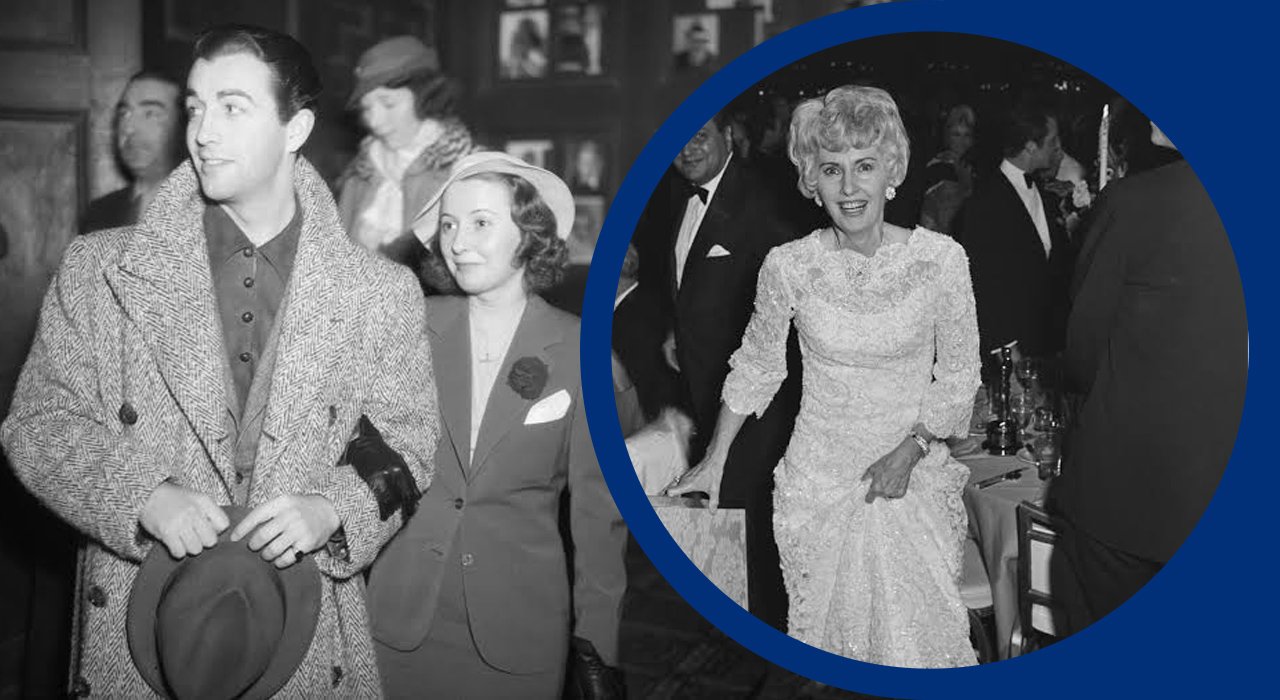
Anthony Dion Fay, often known as “Tony,” was the adopted son of Barbara Stanwyck, the legendary actress celebrated for her decades-long film and television career, and her first husband, entertainer Frank Fay. Born on 5 February 1932, Tony was adopted by the couple in December of that year, and his life became the subject of a landmark California Supreme Court custody case following his parents’ 1935 divorce. This article sets out the verified facts about his adoption, his difficult childhood, and the complicated relationship he maintained with his famous mother throughout his life.
Quick Bio Table
| Detail | Information |
|---|---|
| Full name | Anthony Dion “Tony” Fay |
| Born | 5 February 1932 |
| Died | 2006 |
| Adoptive mother | Barbara Stanwyck, actress |
| Adoptive father | Frank Fay, entertainer |
| Adopted | December 1932 |
| Notable case | Fay v. Fay, California Supreme Court, 1938 |
Who Is Anthony Dion Fay?
Anthony Dion Fay was the adopted son of Barbara Stanwyck, one of classic Hollywood’s most celebrated actresses, and Frank Fay, an entertainer to whom she was married during the early years of her career. Born on 5 February 1932, Tony was adopted by the couple in December 1932, becoming Stanwyck’s only child, since she never had biological children of her own.
Stanwyck obtained a divorce from Frank Fay in December 1935 and was awarded custody of Tony, though the years that followed brought a lengthy legal dispute over Frank’s visitation rights, one that ultimately reached the California Supreme Court and shaped the structure of Tony’s childhood between his two adoptive parents.
Adoption and a Landmark Custody Case
Tony’s adoption by Barbara Stanwyck and Frank Fay in December 1932 placed him at the centre of one of classic Hollywood’s more significant legal disputes following his parents’ 1935 divorce, when Frank was denied visitation rights for approximately fourteen months. The resulting litigation, known as Fay v. Fay, reached the California Supreme Court, which in October 1938 affirmed a structured visitation arrangement granting Frank alternating Saturdays along with Tuesday and Thursday afternoons with his son, on the condition that he remain sober during these visits.
This legal battle, documented through an actual California Supreme Court case record, meant that Tony’s early childhood unfolded amid considerable legal conflict between his two parents, a circumstance that would have brought both instability and public scrutiny to his earliest years, given his parents’ prominence within the entertainment industry.
A Childhood Shaped by Legal Conflict
The considerable legal dispute over Tony’s custody and visitation, requiring intervention from California’s highest court, reflects the genuine severity of the conflict between Barbara Stanwyck and Frank Fay during Tony’s early childhood, a level of legal escalation uncommon even among contentious celebrity custody disputes of the era.
A Troubled and Complex Relationship
According to Victoria Wilson, Barbara Stanwyck’s authorised biographer, who conducted extensive interviews with Tony over many years for her book A Life of Barbara Stanwyck: Steel-True 1907-1940, the relationship between Tony and his adoptive mother was intensely complex, marked by his own loneliness, fear of her, and periods of defiance during his childhood. Tony was sent away to boarding schools and camps during much of his upbringing, a pattern that reflected the considerable difficulty and distance within his relationship with Stanwyck.
Tony and Stanwyck became estranged following his childhood, meeting only a handful of times as adults, a distance that persisted despite Tony’s willingness, later in life, to speak candidly and at length with Wilson about his upbringing and his complicated feelings toward his famous adoptive mother.
Barbara Stanwyck: A Brief Background
To understand Tony’s connection to public attention, it helps to know a little about his adoptive mother. Barbara Stanwyck built one of classic Hollywood’s most celebrated careers, appearing in numerous acclaimed films across several decades before later achieving further success on television, including her role in the popular series The Big Valley.
Life During and After His Parents’ Marriages
Tony lived in Beverly Hills during the Second World War while Stanwyck’s second husband, actor Robert Taylor, served in the Navy, placing him within the household of his mother’s subsequent marriage even as his own relationship with her remained distant and difficult. Film critic Richard Corliss later observed that Tony resembled Stanwyck in just one particular respect, noting that both were, in an important sense, effectively orphans, a description that captures something of the emotional distance that characterised much of Tony’s life in relation to his adoptive family.
Tony died in 2006, according to genealogical records, bringing to a close a life that had been shaped profoundly by his unusual and difficult childhood within one of Hollywood’s most storied families.
Why People Search for Anthony Dion Fay
Interest in Anthony Dion Fay typically arises among fans of Barbara Stanwyck and students of classic Hollywood history researching the actress’s personal life, particularly given the well-documented legal battle over his custody and the considerable detail his own interviews with biographer Victoria Wilson later provided about his difficult upbringing. Because Tony’s story is unusually well-corroborated through both an actual court case and a serious literary biography, searches about him tend to yield more substantive and reliable information than is available for many similarly positioned figures connected to classic Hollywood stars.
A Reportedly Modest Inheritance
According to secondhand reports connected to discussions of Wilson’s biography, Stanwyck left Tony a comparatively modest sum, reportedly around five thousand dollars, in her estate, a detail that has been interpreted by some as reflecting the considerable emotional distance that persisted between mother and son throughout their lives. This specific figure comes from commentary surrounding the biography rather than from the biography’s own text directly, meaning it should be treated with somewhat more caution than the more thoroughly documented facts of Tony’s adoption, custody case, and childhood.
Whether or not the precise figure is accurate, the broader pattern it reflects, of a relationship that remained distant even after Tony reached adulthood, is consistent with the more thoroughly documented accounts of their relationship provided through Wilson’s own research.
An Unusually Well-Documented Classic Hollywood Story
Tony’s story stands out among the children of classic Hollywood stars for the unusual depth of documentation available, spanning an actual California Supreme Court case record and extensive, candid interviews he gave to a serious biographer decades after the events of his childhood. This level of documentation offers readers a considerably fuller and more reliable picture of his life than exists for most similarly positioned figures, whose stories often rely entirely on secondary reporting or brief factual records rather than primary legal documents and first-person testimony.
Understanding this context helps explain why Tony’s story continues to draw interest from those researching Barbara Stanwyck’s life, since his own account offers a rare, direct window into the personal costs sometimes borne by the children of major Hollywood stars during the studio era.
Boarding Schools and the Distance of a Hollywood Childhood
Tony’s years spent at boarding schools and camps, a pattern common among the children of wealthy and busy Hollywood families during the studio era, reflect a particular kind of upbringing where considerable physical distance from a parent could compound whatever emotional distance already existed within the relationship. For a child like Tony, whose relationship with his adoptive mother was already described as fraught with fear and loneliness, this additional physical separation through boarding education likely reinforced rather than eased the emotional distance biographer Victoria Wilson later documented so thoroughly.
This pattern, common among the children of major stars whose careers demanded near-constant filming schedules and public appearances, offers useful context for understanding how a family’s considerable wealth and status could coexist with genuine emotional neglect, a dynamic Tony’s own later interviews with Wilson helped bring into clearer, more documented focus decades after the fact.
A Story That Complicates a Golden Age Legacy
Barbara Stanwyck’s own public legacy centres overwhelmingly on her celebrated film and television career, yet Tony’s own account of their relationship, preserved through his interviews with Wilson, adds a considerably more complicated dimension to understanding her life beyond her professional achievements. This kind of fuller, more honest accounting, incorporating both a star’s professional triumphs and the more difficult aspects of their personal life, reflects the kind of thorough biographical work that distinguishes serious literary biography from the more celebratory or simplified accounts often found in general entertainment coverage.
Understanding Tony’s own perspective, given directly through his interviews before his death in 2006, ensures that any complete account of Barbara Stanwyck’s life includes the genuine complexity of her role as a mother alongside her considerable achievements as one of American cinema’s most enduring stars.
Conclusion
Anthony Dion Fay’s story is defined by his adoption by Barbara Stanwyck and Frank Fay in 1932, the landmark custody battle that followed his parents’ 1935 divorce, and the complex, often distant relationship he maintained with his famous adoptive mother throughout his life. His own candid interviews with biographer Victoria Wilson later provided an unusually detailed and honest account of his difficult childhood within one of Hollywood’s most storied families.
His story illustrates the genuine personal cost that could accompany life within a major Hollywood family during the studio era, offering a rare and well-documented perspective on the private struggles behind one of classic cinema’s most celebrated careers.
Frequently Asked Questions
Who is Anthony Dion Fay?
Anthony Dion Fay was the adopted son of actress Barbara Stanwyck and entertainer Frank Fay.
When was Anthony Dion Fay adopted?
He was adopted by Barbara Stanwyck and Frank Fay in December 1932, shortly after his birth that February.
What was the Fay v. Fay court case?
It was a California Supreme Court case that established a structured visitation arrangement between Frank Fay and his son following Barbara Stanwyck’s 1935 divorce.
Did Anthony Dion Fay have a good relationship with Barbara Stanwyck?
Their relationship was described by her biographer as intensely complex and distant, with the two becoming largely estranged after his childhood.
When did Anthony Dion Fay die?
He died in 2006, according to genealogical records.