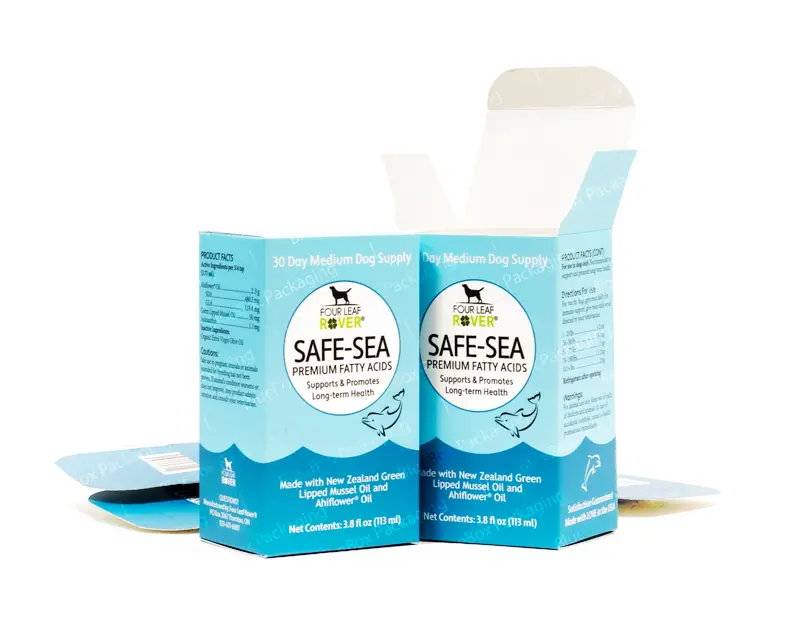
Some packaging structures become popular because they look impressive. Others become popular because they simply work.
Tuck top boxes fall into the second category. Their straightforward opening, secure closure, and adaptable shape make them useful across retail, e-commerce, gifting, cosmetics, food, and many other industries. They can also be customized enough to feel distinctly branded rather than like an ordinary stock carton.
Understanding the structure first makes it much easier to decide whether this style fits your product.
What Are Tuck Top Boxes?
A tuck top box is a folding carton that uses a flap, or tuck tab, to close the package. Instead of requiring adhesive, complicated locking systems, or separate lids, the top panel folds into the box and holds it closed.
The basic structure can be adjusted in several ways. Some designs use a straight tuck flap, while others incorporate dust flaps, locking tabs, or different bottom constructions for added stability.
That simplicity is one of its biggest advantages.
How Does the Structure Work?
The typical tuck top design has several connected panels that fold along scored lines. The main body creates the front, back, and side walls, while the top flap folds inward to close the package.
Depending on the product, the bottom can be designed with a simple tuck closure or a stronger auto-locking construction.
This gives brands room to choose a structure based on how the box will be filled, transported, displayed, and opened.
A lightweight product may not need the same bottom construction as a heavier item.
Why Is the Opening Style Important?
Opening a package should not feel like a small battle.
Tuck-style closures are generally straightforward, which makes them useful for products customers may open frequently. The flap can usually be opened without tools, while the box remains easy to close afterward.
This can be useful for products such as:
- Cosmetics and skincare
- Candles
- Small electronics and accessories
- Food and confectionery
- Stationery
- Retail products
- Promotional items
- Gift products
For e-commerce, a simple opening can also contribute to a smoother unboxing experience.
Choosing the Right Material
The product should determine the board rather than the other way around.
Paperboard is commonly used for folding cartons because it is lightweight, printable, and easy to cut and crease. Thicker grades can provide additional rigidity when the product requires more support.
The board also affects how the finished package feels in the customer’s hands.
A thin carton can work perfectly for a lightweight retail item, while a premium product may benefit from a heavier stock that gives the packaging more structure.
Material selection should also account for shipping conditions, stacking, moisture exposure, and the weight of the product inside.
Customization Starts With the Structure
The biggest mistake is treating customization as something that only happens after the box shape has been decided.
The structure itself can be customized.
A brand might need a taller carton for a bottle, a wider format for a set of products, or a deeper box to accommodate an insert. The dimensions, flap proportions, opening direction, and bottom construction can all be adjusted according to the product.
This is where custom box packaging becomes more useful than relying on a generic size.
The closer the structure matches the product, the less unnecessary space there is inside the package.
Printing Turns the Box Into a Brand Asset
Once the structure is right, the exterior becomes the brand’s communication space.
The front panel normally carries the strongest visual elements, such as the logo, product name, or primary artwork. Side panels can provide additional information, while the back can accommodate instructions, ingredients, specifications, or company details.
Full-color printing is not always necessary. Minimal typography, a strong logo, and carefully selected brand colors can create a polished result without making the design feel crowded.
The goal is clear communication, not filling every available panel.
What About Windows and Inserts?
A tuck top structure can also incorporate additional features.
A die-cut window can give customers a direct view of the product, which can be useful when appearance or color influences purchasing decisions. Inserts can hold products in place, separate multiple pieces, or provide additional protection during transportation.
For fragile or presentation-focused products, the insert becomes especially important.
A Simple Structure With Plenty of Potential
The appeal of Tuck Top Boxes comes from their balance of simplicity and flexibility. They are easy to understand, adaptable to different products, and capable of carrying a strong visual identity without relying on an overly complicated construction.
With the right dimensions, material, printing, closure, and finishing choices, box packaging can be both practical and distinctive. The best tuck top design is ultimately the one that fits the product, matches the way it will be sold, and makes opening the package feel natural rather than complicated.