
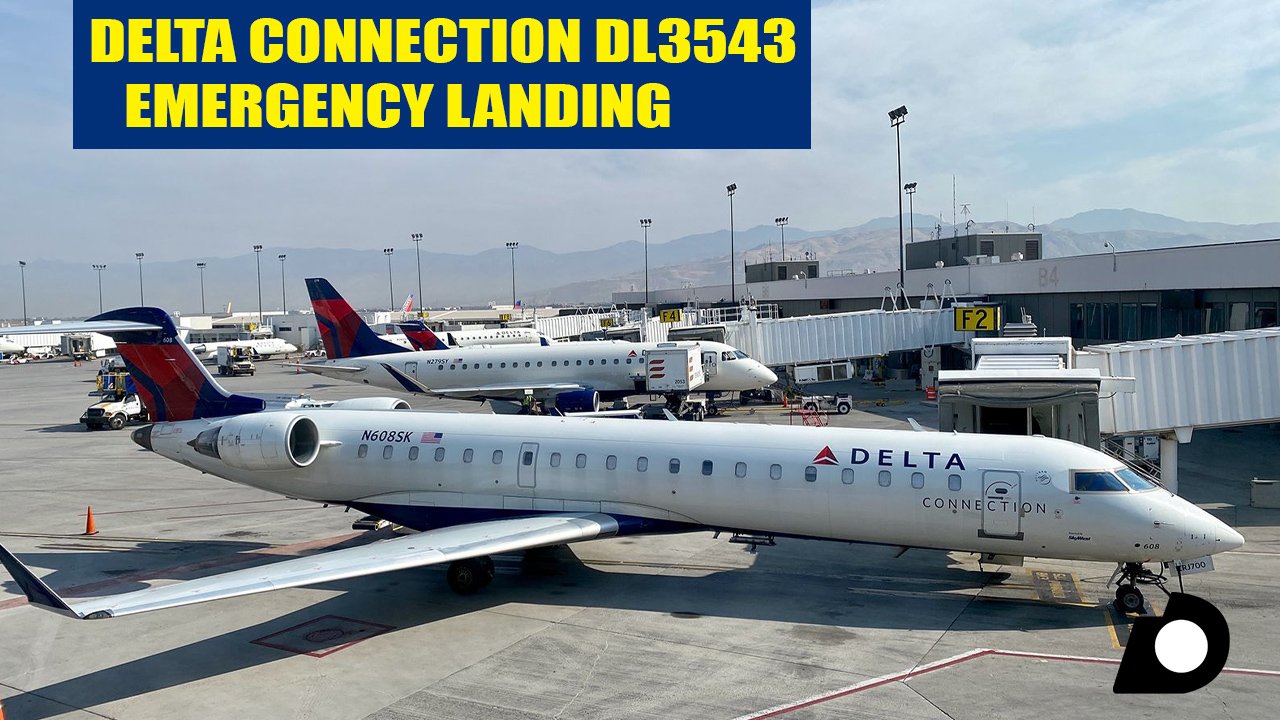
The Delta Connection DL3543 emergency landing began as an ordinary morning flight from Minneapolis and ended with a quick, safe return to the same airport. On Monday, July 7, 2025, a regional jet headed for Chicago Midway stopped climbing, turned around, and touched down in Minneapolis about 37 minutes after it left the ground. The crew declared an emergency on the way back, which gave them priority over other traffic and sent fire and rescue crews to the airfield as a precaution. This article explains what happened, what the facts show, what remains unconfirmed, and what you can do if you ever find yourself on a flight like this one.
Delta Connection DL3543 at a Glance
Delta Connection DL3543 was a scheduled passenger flight from Minneapolis Saint Paul International Airport (MSP) to Chicago Midway International Airport (MDW). The trip normally takes about one hour. The aircraft was an Embraer 175, a regional jet that usually carries around 76 passengers in a Delta configuration, and its registration number was N259SY.
According to the aviation news site AIRLIVE, the crew stopped the climb at 21,000 feet and turned back only 10 minutes after takeoff. The pilots then declared an emergency and asked for a priority landing. The jet landed on runway 12R in Minneapolis, 37 minutes after departure, and taxied to stand C12. Those are the firm details. The reason behind the emergency is a different story, and we cover it below.
What Happened on July 7, 2025
The flight left Minneapolis on a routine regional trip. Flights like this one carry business travelers, families, and passengers who plan to connect to other cities, so a short hop to Chicago often feels like the easy part of a day. Nothing about the departure looked unusual.
Soon after takeoff, the crew changed the plan. Instead of climbing to a normal cruising altitude, they leveled off at 21,000 feet. Then they turned the aircraft around. Pilots do not make that choice lightly, because a return to the airport brings extra work for the crew, air traffic controllers, and ground teams. They make it when a problem needs a closer look on the ground.
The crew then set their transponder to the emergency code, 7700. That code tells air traffic control that an aircraft has an urgent problem and needs special handling. Controllers cleared other traffic out of the way and gave the flight a direct path back to MSP. The jet landed on runway 12R and rolled to a stop without any reported trouble. After landing, it moved to stand C12, which suggests the aircraft reached a gate under its own power and did not need a tow.
A Timeline of the Flight in Plain Words
Here is the sequence in everyday language. The flight took off from Minneapolis bound for Chicago Midway. About 10 minutes later, the crew stopped climbing at 21,000 feet and started a turn back toward the airport. During that turn, they declared an emergency and received priority handling. About 27 minutes after the turn began, the aircraft landed on runway 12R, for a total flight time of 37 minutes. Finally, the jet taxied to stand C12 and the passengers left the aircraft.
The numbers show how quickly a crew can move from a normal flight to a safe landing when everyone follows training. Thirty seven minutes is a short trip, and most of it went to a controlled descent and approach.
Who Operated Flight DL3543?
Many travelers do not realize that “Delta Connection” is a brand and not a single airline. Delta Air Lines sells the tickets, but smaller partner airlines fly many of its shorter routes with regional jets. SkyWest Airlines, Endeavor Air, and Republic Airways all fly under the Delta Connection name.
Online articles disagree about which partner flew DL3543. Several websites say Endeavor Air operated it. However, public aircraft records on FlightAware list N259SY as an Embraer ERJ 175LR that belongs to the SkyWest Airlines fleet and flies as Delta Connection. Because registration records tie directly to the specific aircraft, they are a stronger source than a general blog post. For that reason, this article treats SkyWest as the likely operator. If Delta or the operator publishes a statement that says otherwise, that statement should replace this detail.
Whichever partner operated the flight, the same rules apply. Every U.S. airline, large or small, follows Federal Aviation Administration (FAA) safety standards for maintenance, crew training, and emergency procedures.
Why Did the Crew Declare an Emergency?
This is the question most readers want answered, and the honest answer is that the cause has not been confirmed. We did not find an official statement from Delta, the operator, the FAA, or the National Transportation Safety Board that explains the problem.
That has not stopped the internet from guessing. Some websites say the crew faced a cabin pressurization warning. Others point to a flaps problem, a violent bump of turbulence, or a vague “technical issue.” These claims often repeat each other, and many of them come from pages that offer no source at all. The details also conflict, so they cannot all be right.
A pressurization problem is the most popular theory, and it fits the known facts to a point. A jet that levels off at 21,000 feet and heads straight back to the airport behaves the way a crew might when a cabin system needs attention. Still, the same flight path could match a dozen other problems, from a warning light that needed checking to a sensor fault or a medical concern. A flight path alone cannot tell us the cause. Until the airline or a regulator shares details, the safest statement is that the crew found a problem serious enough to return and declared an emergency to land quickly.
What an Emergency Declaration Really Means
Many people hear the word “emergency” and picture the worst. In aviation, the term covers a wide range of situations, and most of them end exactly like this one, with a normal landing.
When a pilot declares an emergency, the main goal is to get priority. Air traffic controllers move other planes out of the way, offer the most direct route, and alert the airport so help can wait near the runway. Fire and rescue vehicles often line up near the landing area. That step is routine. It does not mean the crew expects a crash. It means the airport prefers to have help ready and not need it than to need it and not have it.
Pilots also use different levels of urgency. A call of “Mayday” signals distress, which means a serious and immediate danger. A call of “Pan Pan” signals urgency, which means a problem exists but the aircraft is not in immediate danger. Reports about DL3543 do not say which call the crew used, so we should not guess. What matters is that the crew asked for help early and received it.
What Squawk 7700 Tells Air Traffic Control
Every aircraft carries a transponder, a device that sends a four digit code to radar. Controllers use that code to identify each plane on their screens. Most of the time, controllers assign the code. In an emergency, the pilot can pick one directly.
The FAA’s Aeronautical Information Manual explains that a pilot who faces an emergency may set the transponder to 7700. When that code appears, it lights up on controllers’ screens and flight tracking websites, which is how aviation news sites spotted DL3543 so quickly. The code does not describe the problem. It only says that the crew needs priority and attention. Controllers then talk with the pilots to learn what they need.
Why Pilots Choose to Return to the Airport
Pilots train for this decision again and again. When a problem appears shortly after takeoff, the departure airport is often the best place to land. It has long runways, emergency equipment, maintenance teams, and the airline’s own staff. Flying on to Chicago would have meant 30 more minutes with a possible problem, while the home airport sat only minutes away.
Crews also follow a simple idea: when in doubt, land. Commercial aviation runs on cautious rules. A warning light, an odd noise, or a sensor reading that does not look right can lead a crew to return, even when the aircraft may be perfectly able to continue. Passengers sometimes feel frustrated when a flight turns back, but that caution is the reason air travel has such a strong safety record.
A short flight also makes the choice easier. The jet had been in the air only a few minutes when the problem appeared, so the crew had a clear path home and plenty of time to plan the approach.
What Passengers Probably Went Through
We did not find public passenger accounts we could verify, so we cannot say exactly what people on board saw or felt. We can, however, describe what passengers on turn back flights usually experience.
First, the plane stops climbing and starts a turn. A flight attendant or pilot usually makes an announcement to explain that the crew has decided to return to the airport. Some passengers feel nervous, and some feel annoyed about missed plans. Most people stay quiet and wait. During the approach, the crew may ask everyone to keep seat belts fastened and stay seated.
After landing, passengers often notice fire trucks near the runway. That sight can feel scary, but it follows standard procedure. Once the aircraft reaches the gate, the crew opens the door, passengers leave, and maintenance teams begin their checks. Airline staff then help passengers rebook on another aircraft or a later flight to Chicago. Rebooking rules and extra help, such as meals or hotel rooms, vary by situation and ticket, so travelers should ask the gate agents or the airline app.
Did Anyone Get Hurt?
The reports we found do not describe any injuries from the Delta Connection DL3543 emergency landing. The aircraft landed normally, taxied to a gate, and the flight ended without any reported damage or accident. The FAA and NTSB did not appear to open a public investigation based on what we could find, though that can change if new information appears.
Because Delta has not released a detailed public statement, we cannot rule out minor issues that never reached the news. Still, nothing in the credible reporting suggests that anyone needed medical help.
How to Spot Reliable Information About Flight Incidents
The DL3543 story shows how fast aviation facts can get twisted online. After a flight makes the news, many websites copy each other, add guesses, and publish articles within hours. Some even give conflicting causes for the same event. Here are a few habits that help you separate solid reporting from noise.
Start with sources that share data you can check, such as flight tracking records, FAA documents, NTSB reports, or statements from the airline. Next, look for specific details like registration numbers, runway names, and times. Vague pages that only repeat the flight number and a general claim about “safety systems working” usually have nothing new to add. Then compare more than one source. When several pages say different things, trust the one that names its evidence. Finally, notice when an article admits what it does not know. Honest reporting says “the cause has not been confirmed,” while weak reporting states a cause with no proof.
What to Do If Your Flight Makes an Emergency Landing
Most travelers will never face an emergency landing, but a little preparation helps you stay calm if it happens.
During the flight, listen to the crew and follow instructions right away. Keep your seat belt fastened whenever the seat belt sign is on, and keep the safety card in the seat pocket in mind. If the crew asks you to stay seated, stay seated. Do not rush to open overhead bins or take your phone out to film while the crew gives instructions, because those actions slow everyone down.
After landing, stay patient. Crews and ground teams need time to check the aircraft and move passengers safely. Once you reach the terminal, open the airline app or visit the service desk to rebook. Keep your boarding pass, receipts, and any messages from the airline. If the airline cancels your trip and you decide not to travel, U.S. Department of Transportation rules generally give you the right to a refund. If you have any health symptoms after the event, such as ear pain, dizziness, or anxiety, tell airport staff or see a doctor.
If the delay causes expenses, check Delta’s customer commitments and your travel insurance or credit card benefits. Many cards offer trip delay coverage that pays for meals or lodging after a long disruption.
Conclusion
The Delta Connection DL3543 emergency landing turned out to be a short, controlled return rather than a disaster. The crew stopped the climb at 21,000 feet, declared an emergency, and landed on runway 12R in Minneapolis only 37 minutes after takeoff. The jet reached its gate, and the reports we found do not describe any injuries.
The cause remains unconfirmed. Pressurization, flaps, and turbulence all appear in online posts, but no official source backs any of them. Until Delta, the operator, or a regulator releases details, treat those claims as guesses. The clear lesson is that crews act early, controllers clear the way, and airports stand ready. Passengers who stay calm, follow instructions, and use the airline’s rebooking tools can handle the rest. We will update this article if an official statement appears.
Frequently Asked Questions
What happened on Delta Connection flight DL3543? On July 7, 2025, the flight left Minneapolis for Chicago Midway, stopped climbing at 21,000 feet, declared an emergency, and landed safely back in Minneapolis 37 minutes after departure.
What caused the DL3543 emergency landing? No official source has confirmed the cause. Online posts mention pressurization, flaps, and turbulence, but none of those claims has solid proof behind it.
Did anyone get hurt on DL3543? The reports we found describe a normal landing and do not mention any injuries.
What does squawk 7700 mean? It is the transponder code that pilots use to tell air traffic control they have an emergency. It gives the flight priority but does not explain the problem.
Who flew Delta Connection DL3543? Aircraft records list the jet, registration N259SY, as part of the SkyWest Airlines fleet flying for Delta Connection, although some websites name Endeavor Air.