
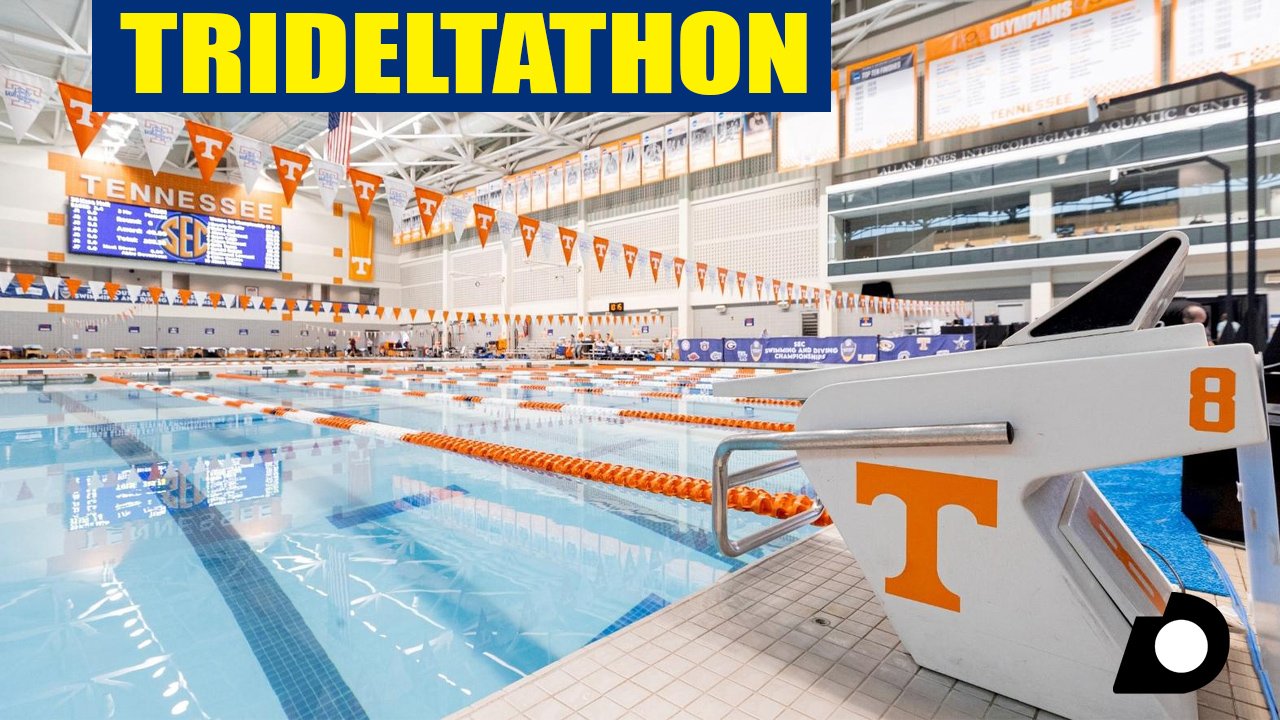
TriDeltathon is a sprint triathlon in Knoxville, Tennessee, and race organizers call it the oldest running pool triathlon in the United States. Athletes swim 400 meters in a pool, bike six miles around the University of Tennessee campus, and then run three miles past some of the best known landmarks in town. The race is short enough for newcomers and fun enough for experienced athletes. It also raises money for children who need medical care. This guide explains how the race works, who can enter, what the course looks like, and how to get ready.
What the TriDeltathon Is
The TriDeltathon is a spring race held on the University of Tennessee campus in Knoxville. Race Day Events organizes it, and the members of the Delta Delta Delta sorority, also called Tri Delta, supply the volunteers. The name comes from that partnership. “Tri” points to the three sports, and “Delta” points to the sorority.
The race uses the standard triathlon order of swim, bike, and run. Most triathlons start in a lake, a river, or the ocean. The TriDeltathon starts in a pool, which makes the swim calmer and easier to manage. You can see the bottom, you can touch the wall, and you never have to worry about waves or cold open water. Many first time triathletes pick pool races for exactly that reason.
The race is not sanctioned by USA Triathlon, according to the official race page. That means it follows its own local rules instead of the national rulebook. Most participants race for fun, for fitness, or to support a good cause, so this rarely matters.
A Short History of the Race
Age is the main thing that sets the TriDeltathon apart. The race page for the 2020 event described it as the 36th year of the race. That count suggests the first TriDeltathon took place in the mid 1980s. Fleet Feet Knoxville also wrote about the race as the oldest running triathlon in the country when it celebrated the 31st edition. The store described that year as the first leg of its Triathlon Grand Prix with Race Day Events.
Over the years, the course has stayed close to the same idea. The distances have not changed much, and the race still finishes on campus. Details such as start times and swim spacing have shifted a little from year to year. Early listings from 2013 and 2014 show a Sunday morning race in April, and later pages show the same spring timing.
The 2020 race did not take place. The University of Tennessee moved classes online that spring, and the organizers canceled the event. They offered several choices to registered athletes. People could transfer their entry to 2021, move it to another Race Day Events triathlon, ask for a refund, or let the race keep the fee as a donation to the children’s hospital. That response showed how much the organizers cared about both the athletes and the charity.
The Three Parts of the Race
The TriDeltathon follows a short, simple path. Each part is easy to understand, and each has a few details worth knowing before race day.
The Swim: 400 Meters in the Pool
The race opens at the University of Tennessee Student Aquatic Center. Swimmers cover 400 meters, which equals eight lengths of a 50 meter pool. The 2020 race page described the swim as indoors. An older listing from 2014 described a heated outdoor pool, so check the current race page for the latest setup.
The start is not a mass splash. Swimmers enter the water one at a time, about seven seconds apart according to the 2020 race page. An older listing used five second gaps. Organizers place swimmers in order of their estimated 400 meter time, with the fastest swimmers going first. When you register, you give your best guess for your swim time, so try to be honest. A realistic estimate keeps you from getting stuck behind slower swimmers or from being passed again and again.
The swim path is easy to follow. You swim down one lane, duck under the rope at the end, and cross to the next lane. You repeat that pattern until you finish the distance. This style is called a serpentine swim, and it works well in a crowded pool because everyone moves in the same direction.
The Bike: Six Miles Around Campus
After the swim, you head to the transition area, grab your bike, and ride six miles. The route tours the University of Tennessee campus and runs along Neyland Drive, which follows the Tennessee River. An older description from 2014 called it a two lap ride with a few rolling hills and a flat stretch along the river.
Six miles is a short ride, so even casual cyclists can finish it. The campus has hills, though, and traffic control matters in a busy college area. Ride carefully, follow the course marshals, and keep a safe distance from other riders. A helmet is required in nearly all organized triathlons, so plan to wear one and check the race rules to be sure.
The organizers post the bike route on MapMyRide through the official race page. Studying the map before race day helps you know when the hills come and where the turns are.
The Run: Three Miles Past Neyland Stadium
The last leg is a three mile run through campus. The route passes Neyland Stadium, home of the Tennessee Volunteers football team, and Thompson Boling Arena, where the basketball teams play. An earlier description called the run fairly hilly, with water stops at miles one and two.
Your legs will feel heavy when you start running, because you just spent time on the bike. Triathletes often call that feeling “jelly legs.” It fades after the first few minutes. Start at a pace that feels slightly easy, and then speed up if you have energy left in the last mile. The finish line gives you a great view of campus and a crowd that cheers for every athlete, whether you finish first or last.
Who Can Race
The TriDeltathon welcomes a wide range of ages. On the 2020 registration page, the individual event was open to ages 10 and up, and the relay event was open to ages 7 and up. That makes it a good race for families, school groups, and friends who want to try something new together. Always read the current registration page, since age rules can change.
Students at the University of Tennessee often take part, and the race has offered student pricing. Local runners, cyclists, and swimmers join them, along with athletes from nearby cities who use the race as an early season test. The 2020 page listed an expected turnout of about 350 athletes. A crowd that size feels lively without being overwhelming.
Individual and Relay Options
You can enter the TriDeltathon in two ways. In the individual event, one person completes the swim, the bike, and the run. In the relay event, a team splits the work. One teammate swims, another bikes, and a third runs.
The relay option opens the race to people who love one sport but not all three. A strong swimmer can join two friends who prefer biking and running. Families can also pass the baton from parent to child. Since relay athletes can be as young as seven according to the 2020 page, the relay is a great way to bring younger kids into the fun.
Race Day Schedule and Packet Pickup
The race starts early. The 2020 listing showed an 8:30 a.m. start on a Sunday in April. Race Day Events offered packet pickup at the Aquatic Center beginning at 6:30 a.m. on race morning, and day of race registration was available at the same time. A packet usually includes your race number, a swim cap, and your shirt.
The organizers also set up an earlier pickup option at Fleet Feet in Knoxville during race week. Fleet Feet Sports offered a beginner clinic at the Aquatic Center the week before the race as well. These clinics help new athletes learn how transitions work, where to rack their bikes, and what to expect in the pool. If you feel nervous about your first triathlon, a clinic is a smart way to calm those nerves.
Arrive early on race day. Parking on a college campus can take time, and you need to set up your gear in the transition area before the swim begins. Walk through the path from the pool to your bike and from your bike to the run exit so you can find them quickly when you feel tired.
Cost and Registration
Entry prices have changed over the years, so use the official page for current fees. An early listing from 2013 shows how pricing tends to work. Individual entries cost $40 for early registration, rose to $55 closer to race day, and reached $65 on the day of the race. Relay teams paid more because they included several athletes. Students received a $10 discount on individual entries and a $5 discount on each relay team member.
The lesson is simple. Registering early almost always costs less. Most Race Day Events races use an online registration service called RunSignup, and the TriDeltathon uses it too. You can pick your event, enter your estimated swim time, and pay in a few minutes.
Awards and Race Gear
The race gives awards for overall winners, age group winners, and relay teams. Age group awards give everyday athletes a real chance to earn a prize, since you compete against people near your own age instead of the whole field.
Participants receive a soft cotton race shirt. For 2020, the organizers also offered a tank top option for women. The organizers have also used the event to show how fast local athletes can go. Fleet Feet Knoxville reported that one of its employees won the overall title in 40 minutes and 56 seconds at the 31st race. That time shows how fast a strong athlete can finish all three legs, but most people take longer, and that is perfectly fine.
Why the Race Supports Kids
The money raised by the TriDeltathon goes to East Tennessee Children’s Hospital. A related race page explains that the proceeds also support Camp Eagles Nest, a summer camp for children with cancer and rare blood disorders. That gives every entry fee a purpose beyond your own finish time.
Delta Delta Delta also gives the race a stronger community feel. Chapter members volunteer at the event, cheer on the athletes, and help keep the day running smoothly. The national Tri Delta organization works with St. Jude Children’s Research Hospital, and the Knoxville chapter’s race carries the same spirit of helping young patients at the local level.
Training Tips for Beginners
You do not need years of experience to finish a sprint triathlon. A simple training plan of six to eight weeks works for many beginners, as long as you already have a basic level of fitness. Here is how to approach each sport.
For the swim, spend time in a pool and practice swimming 400 meters without stopping. Rest at the wall if you need to, then build up until you can swim the distance smoothly. Practice ducking under a rope and turning around at the wall so the serpentine format feels natural.
For the bike, ride the six mile course or a similar route a few times. Learn how to shift gears on hills, and practice drinking water while you ride. If you do not own a road bike, a hybrid bike or a mountain bike with smooth tires can do the job.
For the run, build up to three miles with a mix of running and walking. Many beginners finish a sprint triathlon at an easy jog.
Practice a “brick” workout once or twice before race day. A brick workout means doing two sports back to back, like a short bike ride followed right away by a run. It teaches your legs how to handle the switch.
Finally, practice your transitions. Lay out your gear in the order you will need it, such as shoes, helmet, and race number. A smooth transition can save you minutes and keeps your stress low.
What to Bring on Race Day
Pack a swimsuit, goggles, and a towel for the pool. Bring your bike, helmet, and cycling shoes or sneakers. Add running shoes, a hat or visor, and any food or drink you like. A small bag helps you carry everything to the transition area. Check the athlete guide for any rules about what you can leave in your space. Pin or clip your race number where the rules say to place it, since officials need to see it on the bike and the run.
The TriDeltaRUN 5K
The same organizers also host a second event called the TriDeltaRUN. It is a 5K run at UT Gardens on the University of Tennessee Agriculture Campus, and it follows the Third Creek greenway. Race listings show that Delta Delta Delta and Race Day Events offered the race for a fifth year in 2026. The race starts at 10 a.m., and day of race registration opens earlier that morning. Like the triathlon, the 5K gives its proceeds to East Tennessee Children’s Hospital and Camp Eagles Nest.
The TriDeltaRUN works well if you love the cause but do not want to swim or bike. It also works well for friends and family members who want to cheer on a triathlete and join in with a shorter run.
Is the TriDeltathon Right for You?
If you are looking for a friendly first triathlon, this race fits well. The pool swim removes the fear of open water. The six mile bike ride and three mile run stay short enough for casual athletes. The relay option lets you share the work, and the charity gives you a reason to cross the finish line with a smile.
Experienced triathletes can find value here too. A short, fast course helps you test your fitness early in the season. Age group awards give you something to chase, and the race atmosphere is relaxed and welcoming.
Keep in mind that details change from year to year. Dates, prices, swim start times, and course notes can shift. Before you sign up, visit the official TriDeltathon page on RunSignup or the Race Day Events website to confirm the latest information.
Conclusion
The TriDeltathon proves that a triathlon does not need to be huge or scary to be meaningful. It gives you a 400 meter pool swim, a six mile bike ride, and a three mile run on one of the most recognizable college campuses in the South. It has a long history, a warm volunteer team, and a purpose that helps children in East Tennessee. Whether you race alone or with a relay team, you will leave with a finisher’s shirt, a story to tell, and the knowledge that your entry helped someone else. If you have thought about trying a triathlon, this race makes a strong place to start.
Frequently Asked Questions
What is the TriDeltathon?
It is a sprint triathlon in Knoxville, Tennessee, with a 400 meter pool swim, a six mile bike ride, and a three mile run. Race organizers call it the oldest running pool triathlon in the country.
Where does the TriDeltathon take place?
The race starts at the University of Tennessee Student Aquatic Center and follows a route through campus and along Neyland Drive.
Who can enter the race?
The 2020 listing allowed ages 10 and up in the individual event and ages 7 and up in the relay. Check the current registration page for any changes.
Where does the money go?
Proceeds support East Tennessee Children’s Hospital and Camp Eagles Nest, a summer camp for children with cancer and rare blood disorders.
Can I race as a team?
Yes. The relay event lets one person swim, one bike, and one run, so friends or family can share the effort.