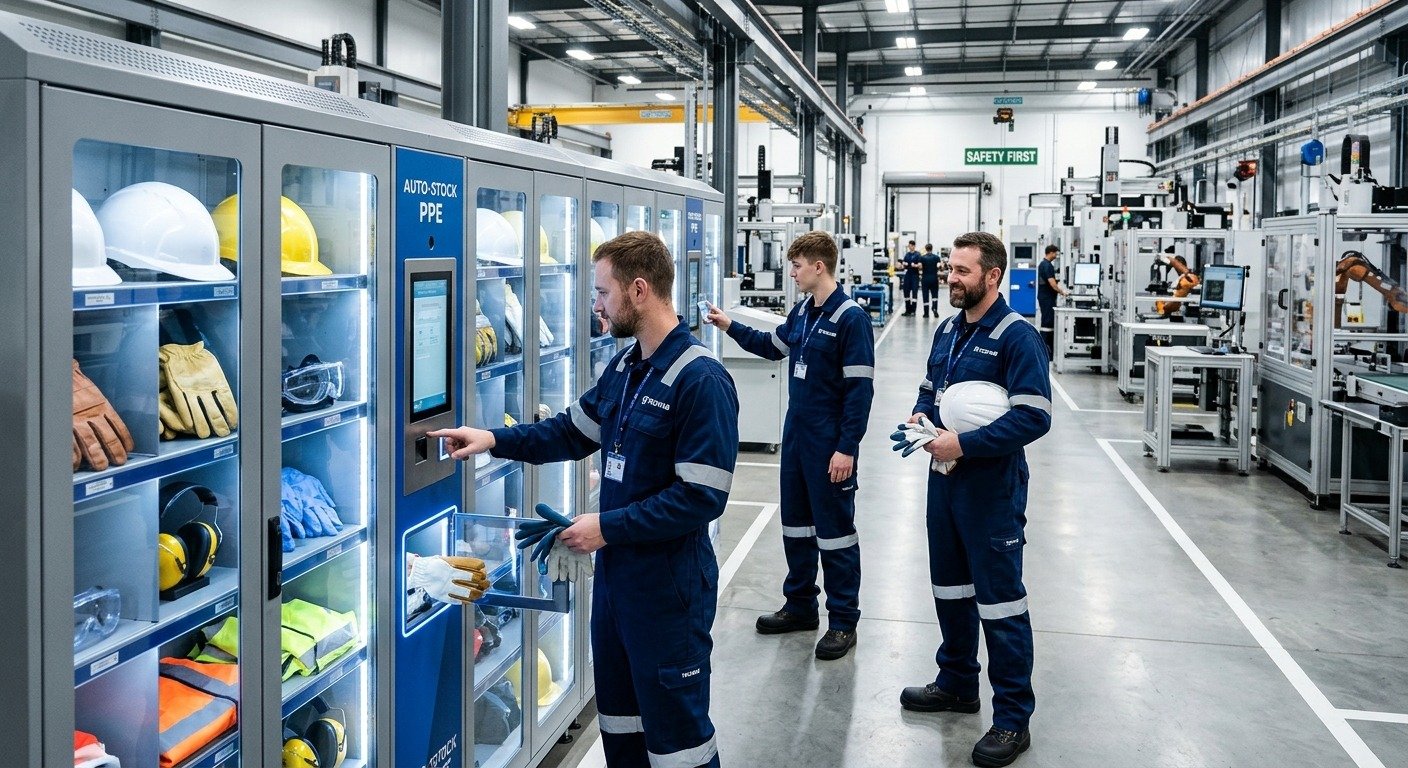
Workplace safety hinges on more than just having the right equipment on hand. It depends on whether that equipment is actually accessible when workers need it most. Too often, personal protective equipment sits in a supply closet across the facility, locked away behind a process that slows workers down or discourages them from grabbing what they need before starting a task.
That’s where a smarter approach to PPE distribution comes in. Automated storage and dispensing systems are changing how facilities manage safety gear, giving workers instant access while giving safety managers the data and control they need to keep inventory accurate and costs in check. Arbill has built its reputation on helping companies close these gaps, combining decades of safety expertise with practical tools that make compliance easier, not harder.
This post explores why traditional PPE storage methods fall short, what modern dispensing technology offers instead, and how facilities across industries are using these systems to protect their workforce while improving their bottom line.
Why Traditional PPE Storage Methods Fall Short
For decades, many facilities have relied on manual systems to distribute personal protective equipment. A supervisor hands out gloves from a box. A storeroom attendant tracks safety glasses on a clipboard. An employee walks to a central supply room, hoping the right size respirator is in stock.
These methods create friction at every step. Workers lose time traveling to and from supply areas, which adds up across a shift, a week, and a year. Inventory becomes difficult to track accurately, leading to overstocking in some categories and frustrating shortages in others. And without a clear record of who took what and when, safety managers struggle to identify usage patterns, flag potential misuse, or forecast future needs with any precision.
The consequences go beyond inconvenience. When PPE isn’t easy to access, workers sometimes skip it altogether, especially during fast-paced tasks or when the nearest supply point feels too far away. That decision, made in a rushed moment, can lead to preventable injuries.
How Automated Dispensing Technology Solves These Problems
Automated PPE dispensing systems address these pain points directly by putting equipment closer to the point of use and automating the tracking process. Instead of relying on manual checkouts or honor-system supply closets, these systems use secure, electronic access points that dispense gear on demand while logging every transaction.
Workers scan a badge or enter a code, select what they need, and get it immediately. No searching, no waiting, no guessing whether the item is in stock. Behind the scenes, the system records the transaction, updates inventory counts in real time, and can trigger automatic reordering when supplies run low.
This shift has a measurable impact on compliance. When the right gear is always within reach, workers are far more likely to use it consistently. Facilities also gain a layer of accountability that manual systems simply cannot match, since every dispensed item is tied to a specific employee and timestamp.
Real-Time Data Changes How Safety Managers Operate
Beyond convenience, the data generated by automated dispensing systems gives safety managers a strategic advantage. Instead of estimating usage based on rough order history, they can see exactly which items are being used, how often, and by whom.
This visibility makes it possible to spot trends early. If a particular department is burning through a certain glove type faster than expected, that could signal a process issue worth investigating. If usage patterns shift after a new training initiative, managers can measure the impact directly. These insights turn PPE management from a reactive task into a proactive strategy.
Accurate data also simplifies budgeting. Rather than guessing at annual PPE spend, facilities can base projections on actual consumption, reducing waste from overordering while avoiding the costs associated with emergency restocking.
What to Look for in a PPE Storage and Dispensing Partner
Not every automated storage system is built the same way, and choosing the right partner matters as much as choosing the right technology. A few factors worth evaluating include:
- Ease of integration: The system should fit into existing facility workflows without requiring a complete operational overhaul.
- Scalability: Whether a facility has one location or dozens, the solution should grow alongside the business.
- Reporting capabilities: Look for dashboards and reports that translate raw usage data into actionable insights.
- Ongoing support: Equipment and technology both require maintenance, so a responsive support team is essential for keeping systems running smoothly.
- Product expertise: A partner who understands PPE selection, not just storage logistics, adds significant value by helping match the right gear to the right job.
Arbill brings all of these elements together, pairing its storage technology with deep knowledge of safety compliance standards and product selection built from years of working directly with facilities across a wide range of industries.
Bringing It All Together with the Right System
Instant, round-the-clock access to properly sized safety gear changes how workers interact with protective equipment altogether. PPE Vending Lockers give facilities a practical way to put that access directly on the floor, reducing downtime and reinforcing safe habits without adding friction to the workday. These systems combine secure dispensing with real-time inventory tracking, so safety teams always know what’s in stock and who is using it.
Arbill designs these solutions to fit seamlessly into existing operations, whether that means placing units near high-traffic work areas, integrating with existing badge systems, or customizing inventory based on the specific hazards a facility faces. The result is a safety program that’s easier to manage, easier to follow, and backed by data that supports smarter decisions over time.
Making Safety a Built-In Part of the Workday
Protective equipment only works when it’s actually used, and it’s only used consistently when it’s genuinely easy to access. Facilities that invest in smarter distribution systems aren’t just upgrading their storage process. They’re removing one of the biggest barriers between their workforce and the protection they need.
Arbill has spent years helping organizations rethink how they approach workplace safety, and modern PPE storage technology is a natural extension of that mission. For facilities ready to reduce friction, improve compliance, and gain better visibility into their safety programs, now is a good time to explore what automated dispensing can offer.
Frequently Asked Questions
What industries benefit most from automated PPE storage systems?
Manufacturing, construction, warehousing, oil and gas, and healthcare facilities all benefit significantly, particularly those with large workforces, multiple shifts, or high PPE turnover rates.
How does automated dispensing improve compliance?
By placing PPE directly at the point of use and removing delays or inconvenience, workers are far more likely to grab and use required gear consistently, rather than skipping it when supply is inconvenient.
Can these systems integrate with existing badge or ID systems?
Yes, most automated dispensing solutions, including those offered by Arbill, can integrate with existing employee badge systems for streamlined access and accurate usage tracking.
Does automated storage reduce PPE costs?
Many facilities see reduced costs over time due to more accurate inventory tracking, less overordering, and reduced waste from unmonitored distribution.