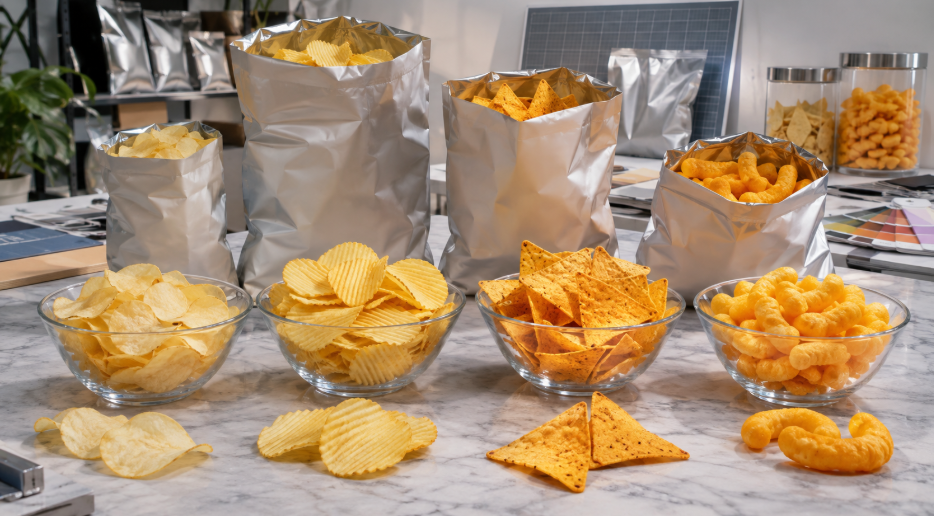
A bag of chips may look like an ordinary food package, but its dimensions are the result of many practical decisions. Manufacturers need to fit fragile pieces into a sealed container without crushing them, wasting excessive material, or creating problems on the packaging line. One important detail is often overlooked: chips do not all have the same shape. A thin potato slice, a thick ridged chip, and a puffed corn snack can occupy very different amounts of space.
This is why choosing suitable chip bag sizes involves more than selecting a target weight. The shape, thickness, and arrangement of the snack can influence how full a bag appears and how easily it can be sealed. By understanding these differences, food producers can make packaging decisions based on the actual product rather than assumptions about how much space a certain weight should require.
Why the Same Weight Can Take Up Different Amounts of Space
Imagine placing two equal-weight portions of snacks into separate containers. One portion consists of small, relatively flat pieces, while the other contains large, curved pieces. Even though the weight is identical, the second portion may occupy more room because the pieces cannot fit closely together.
This is a question of bulk volume: the space taken up by the snacks and the gaps between them. It is different from the volume of the solid food alone.
For packaging teams, measuring bulk volume helps avoid choosing bags that are either uncomfortably tight or unnecessarily large.
Thin Potato Chips Have Their Own Packing Behavior
Traditional thin potato chips often have curved edges and irregular surfaces. As they fall into a bag, some overlap while others rest at different angles. Their arrangement can change when the package is gently shaken or moved.
Although individual chips are thin, they do not form a neat stack in a flexible bag. Small gaps remain between the pieces, and their total volume depends on how they settle.
A packaging test should use chips from normal production, not perfectly shaped samples chosen by hand. That provides a more realistic picture of how the product behaves during filling.
What Changes With Ridged and Kettle-Cooked Chips?
Ridged chips have grooves that give them a distinctive texture. Kettle-cooked chips can also differ in thickness, curl, and stiffness from standard thin chips. These characteristics affect the way individual pieces contact one another.
A thicker chip is not automatically more difficult to package, and a ridged chip does not always require a larger bag. The answer depends on its dimensions and how the pieces settle together.
Brands should compare actual samples at the same target weight. They can then evaluate filled height, the amount of room left near the seal, and whether handling causes excessive breakage.
Why Triangular Tortilla Chips Need Special Attention
Tortilla chips introduce another geometric challenge. Many have corners, curved surfaces, or folded edges, and these features can change the way they collect inside a package.
When triangular chips fall together, their points may catch against nearby pieces instead of sliding smoothly into place. Their arrangement can create pockets of unused space within the pile.
Manufacturers need to assess more than the bag’s overall capacity. They should also observe whether chips become trapped near the opening during sealing.
The practical goal is not to force all the pieces into the smallest possible space. It is to find a format that fills consistently and handles the product gently.
Puffed Snacks Behave Differently From Sliced Chips
Puffed corn snacks, cheese puffs, and other expanded products can be particularly light for their size. A relatively small weight may fill a surprisingly large container.
Their shapes can also vary widely, from short curls to long sticks or rounded pieces. These differences affect the amount of open space between snacks when they are poured into a bag.
Some puffed products are more easily crushed, while others can withstand more movement. Packaging decisions should therefore reflect the particular recipe and texture rather than rely on broad product categories.
Testing the finished snack is especially important when changing its shape or manufacturing process.
A Simple Method for Testing Product Volume
Before approving a package, manufacturers can run straightforward sample tests. The purpose is to see how a normal quantity of snacks behaves under realistic conditions.
When comparing chip bag sizes, a useful process includes:
- Weigh a standard portion: Use the same target net weight for every trial.
- Measure loose volume: Pour the sample into a suitable container without pressing it down.
- Repeat the test: Compare several portions because chip shapes and settling patterns vary.
- Fill sample bags: Check how the product looks and moves inside the proposed dimensions.
These observations provide a better starting point than choosing dimensions from a photograph or a generic size chart.
The Filling Process Also Depends on Shape
On a packaging line, chips usually move through equipment that delivers measured quantities into bags. Their size and shape can affect how smoothly they travel through the system.
Long or irregular pieces may bridge across narrow openings, while fragile pieces may break if they encounter hard drops or unnecessary pressure. Different products can also settle at different speeds after entering the bag.
A workable design must leave sufficient clearance in the product path and enough time for the chips to settle before sealing.
This is one reason equipment trials using the real product are so valuable. They can reveal issues that a drawing of the bag cannot show.
Flexible Bags and Rigid Containers Offer Different Options
Most familiar chips are sold in flexible bags, but some uniformly shaped snack products are packed in rigid tubes or other containers. The two formats organize their contents differently.
Flexible bags allow irregular pieces to settle into a loose arrangement. Rigid containers, particularly those designed for stacked snacks, may hold pieces in a more controlled position.
Neither format is automatically best for every product. A tube intended for uniform chips may be unsuitable for irregular slices, while a flexible bag might not provide the presentation desired for a neatly stacked snack.
The product’s shape should help guide the packaging format.
Why Empty Space Must Be Considered Carefully
The unfilled area inside a chip bag is not always wasted space. Many producers use nitrogen flushing to limit oxygen exposure, and the gas-filled area can provide some cushioning against impacts.
However, this does not mean manufacturers should simply choose the biggest bag available. Too little room can make filling and sealing difficult, while excessive space can make packaging inefficient.
The appropriate amount depends on the product, the sealing method, and the conditions the bag will face during handling.
Filled samples should be inspected after transport-style tests, not only immediately after leaving the production line.
How to Write a Useful Packaging Specification
Once a sample package performs well, the details should be recorded clearly. A written specification helps production teams and packaging suppliers work from the same expectations.
Useful information includes the target net weight, bag width and length, film type, sealing requirements, and the acceptable range of filled appearance. Teams may also record product dimensions, typical bulk volume, and test results for breakage.
These measurements are especially important when several chip varieties share a brand. A bag approved for one product should not automatically be used for another without checking the fit.
Clear specifications reduce guesswork during later production runs.
When a Recipe or Shape Changes, Recheck the Bag
Packaging requirements can change even when the printed product weight stays the same. A manufacturer may adjust slice thickness, introduce a new cutter, or change a recipe in a way that affects the finished chip’s size and shape.
Such changes can alter the amount of space needed inside the package and the way snacks pass through filling equipment.
Before continuing with the old packaging settings, the business should test updated samples. Even small changes are worth checking when they affect the physical structure of a delicate snack.
This habit helps manufacturers maintain consistency across product updates.
Conclusion
Chip packaging works best when decisions begin with the food itself. Weight matters, but so do shape, thickness, loose volume, and the way individual pieces settle inside a package. Looking at these details can help manufacturers select dimensions that support consistent filling and reasonable product protection.
For businesses evaluating packaging equipment and bag formats, pallasmt.com offers information about machinery and packaging solutions. Considering equipment capabilities alongside real sample tests can help companies choose a format that suits their particular snack rather than relying only on general measurements.
Whether the product is a thin potato chip, a triangular tortilla chip, or a light puffed snack, there is no substitute for testing it in the intended package. The right fit comes from understanding the product and verifying that the finished bag performs as expected.