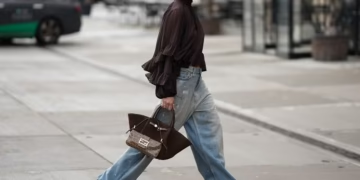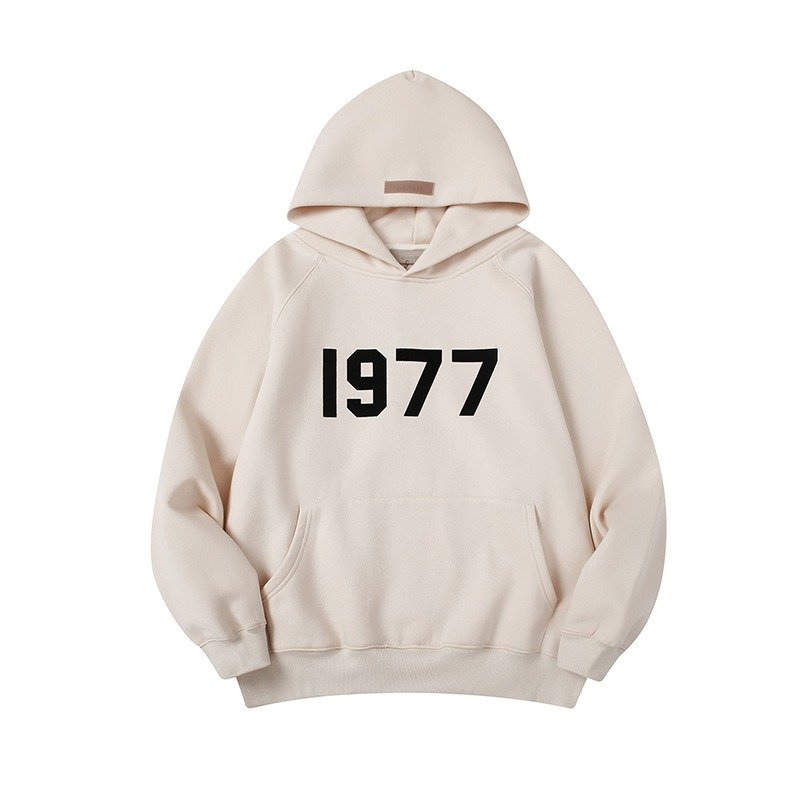
There’s a shirt in most drawers that looks wrong the second it goes into a waistband, and another one in the same drawer that only looks finished once it’s in there. Same body, same jeans, two completely different outcomes — and it has almost nothing to do with the jeans. Body length and hem shape settle the argument long before you’ve pulled the thing over your head, which is why scrolling the shirt grid at Essential Clothing can be mildly frustrating: the flat-lay photos are the one place that information refuses to show up clearly.
Body length does most of the work
A tee cut to be worn out sits around the hip bone or just under it, and that’s a choice the pattern-maker made rather than an accident of sizing. There isn’t spare fabric below the belt line because nobody expected any to be needed. Push a shirt like that into a waistband and maybe an inch or two of jersey is holding it down, which isn’t enough, so the first reach overhead sends the whole hem walking back out.
The longer body is a different garment in practice, even when the label looks identical. It carries a few inches past the waistband, the weight of it pulls downward, and friction against your jeans holds the fold through a normal day. Honestly, that single difference explains more untidy tucks than fabric or body shape ever will, and it’s the hardest thing to read off a listing, because a long tee on a tall model photographs more or less like a cropped one on a shorter model.
Curved hems and straight hems want different things
A curved hem — the scooped kind, longer at front and back, rising toward the side seam — is a signal. That shape is there so the shirt drapes over your hips instead of cutting a hard horizontal line across them, and it reads as finished (loose, which is the point) rather than unfinished. Tuck one and the two long tails bunch at the front and back of the waistband while the short sides have almost nothing to grip, which leaves a lopsided lump low on the belly that no amount of smoothing fixes for long.
Straight hems do pretty much the opposite, since fabric arrives at the waistband evenly all the way around, so it folds once and lies flat and the bulk spreads out instead of gathering in two spots. That’s the hem that disappears. Left untucked, mind you, a straight hem across a wide boxy fit can look abrupt — a flat line just below the hip with none of the softness the curve was there to create. So the hem isn’t really a quality marker, more a note from whoever drew the pattern about which way the shirt was meant to be worn.
What the boxy cut does to all of this
Boxy, in the sense the word gets used here, just means the chest and the waist measure fairly close to each other, so the body falls more or less straight down rather than tapering in. Worn out, that’s the entire look, and the drop shoulder sitting past the shoulder seam belongs to the same idea. Tucked, though, you’re feeding a wide tube of cotton jersey into a much narrower opening, and all that width has to go somewhere.
Where it goes is sideways, over the hips, as a soft ridge. Heavyweight jersey makes it worse, because thick fabric creases in thick folds, and the same is true of anything in cotton fleece or French terry. A boxy shirt also tends to run shorter in the body relative to its width, which stacks both problems together — not much length to anchor, plenty of width to bury. That’s how the same person tucks one plain gray tee beautifully and fails completely with another that fits perfectly well everywhere else.
| Key Takeaways Short body plus curved hem means the shirt was cut to be worn out, and tucking fights the pattern. A straight hem with length past the waistband is the combination that folds flat and stays put. |
The sitting-down test nobody runs before buying
In front of a mirror, pretty much anything can be made to look tucked. Then you sit, and sitting eats a surprising amount of a shirt’s usable length, because your torso folds while the waistband climbs. Short bodies surrender right there, and by the third time you’re up and down the hem has crept out at the back where you can’t see it, which is the version that bothers people most.
The waistband matters as much as the shirt
A high-rise waistband solves half of this by itself, since it covers more of the folded fabric and sits above the widest part of the hip rather than across it. Mid and low rises put the fold exactly where the eye lands, which is a bit unfair on the shirt. A drawcord waist is softer and more forgiving than denim, though it grips less, so a tuck into the pants of a tracksuit set tends to drift loose by lunchtime.
The twenty shirts in the Essentials T-Shirts category run $75 to $95, and what I’d look at closely in each photo is where the hem lands on the model and whether the side seam rises. Those two details say more about how you’ll end up wearing the shirt than the colorway does. Since the shop publishes no size chart, the photos are the only read available — and off-white or mint gray will show a tucked ridge more than matte black, sage or dark oatmeal, so color isn’t irrelevant either.
Frequently Asked Questions
Will a tee stretch out enough to tuck after a few wears?
Width, maybe slightly. Length, not really — cotton jersey relaxes a little across the body and then loses most of that back in the wash, so a short hem stays a short hem. Waiting for a shirt to grow into a tuck is a losing bet.
Does sizing up give me a tuckable shirt?
It adds length and width together, so you gain an inch or two of hem plus a wider shoulder and body you may not want, and on a boxy pattern that extra width is the thing creating the bulk you were trying to avoid in the first place.
Can I tell any of this from the listing photos?
Partly. A hem rising at the side seam is visible if you’re looking for it, and so is roughly where the hem lands on the model’s hip. Fabric weight is what photos won’t tell you, and with no cash refunds here — exchange or store credit inside 30 days, unworn with tags — a wrong shirt goes back untested.
So the sensible version of all this is deciding how you want to wear the shirt before picking it rather than afterward. A long straight hem for tucking, a curved one for leaving out, and some idea of what a boxy body will do around a waistband. Worth a slow look through the shirt grid with that in mind, because the hem is sitting right there in most of the photos once you know it’s the thing you’re looking at.